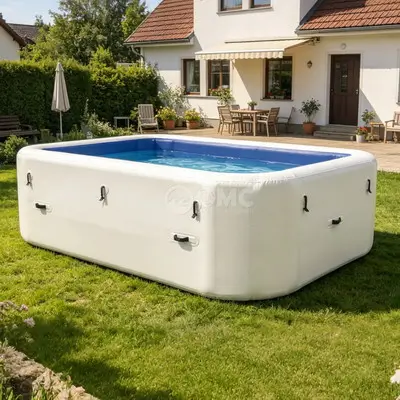
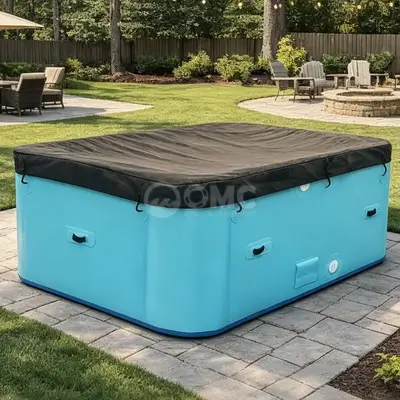
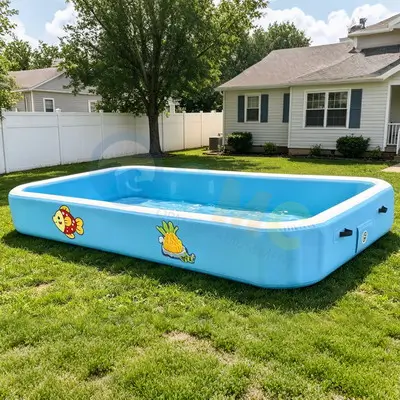
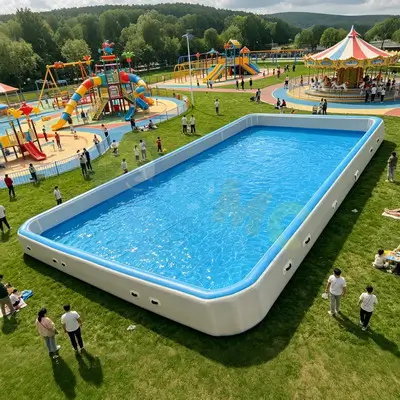
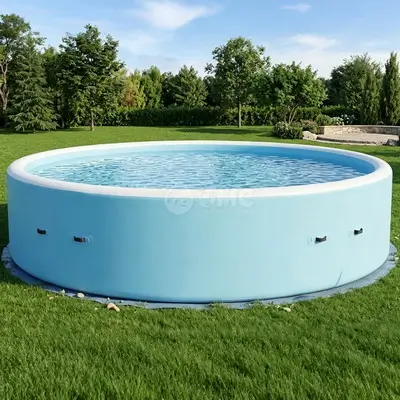
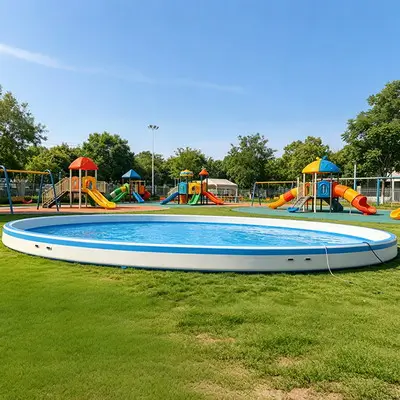
💡 A commercial drop stitch inflatable pool costs $280–$1,800+ per unit at factory-direct pricing. Four layers drive that number: raw materials (40–60%), manufacturing (15–25%), logistics (20–30%), and certification and packaging (5–10%). Most commercial operators recover their full investment within 6–18 months.
- 🧱 Drop stitch fabric is the biggest cost driver — it's 40–60% of total price
- ⚙️ RF + Heat Fusion adds 15–25% in manufacturing cost — but it's worth it
- 🚢 Shipping runs 20–30%; sea freight is 8–12× cheaper than air
- 📋 EU/US certification adds $800–$3,000 per product line, one time
- 📈 Commercial operators typically recover costs within 6–18 months
📑 Table of Contents
- 1. What Drives Drop Stitch Pool Cost?
- 2. Raw Material Cost — Why Fabric Eats 40–60% of Your Budget
- 3. Manufacturing Cost — Welding, Labor, and Compliance
- 4. Shipping — The Hidden Cost Most Buyers Miss
- 5. Cheap vs. Premium — The Real Numbers
- 6. ROI — What Commercial Operators Actually Earn Back
- 7. Case Study — Eco Resort in Southeast Asia
- 8. FAQ
1. What Drives Drop Stitch Pool Cost?
🔍 Supplier quotes for the same pool size can swing by 200–400%. No explanation. No breakdown. That gap isn't random — it comes down to four cost layers: materials, manufacturing, logistics, and compliance. Each one has its own price variables, and most buyers only see the final number.
The global inflatable leisure products market was worth roughly $2.8 billion in 2023. It's growing at a CAGR of 5.4% through 2030 (Grand View Research, 2024). Drop stitch construction now leads the commercial segment. Why? It holds 8–15 PSI of pressure — versus 1–3 PSI for a standard inflatable. That pressure tolerance changes everything about the structure, and therefore the cost.
If you're buying for a hotel, resort, rental fleet, or event business, never judge the commercial inflatable pool price by unit cost alone. A 5-year total cost comparison almost always flips the verdict in favor of the higher-spec product.
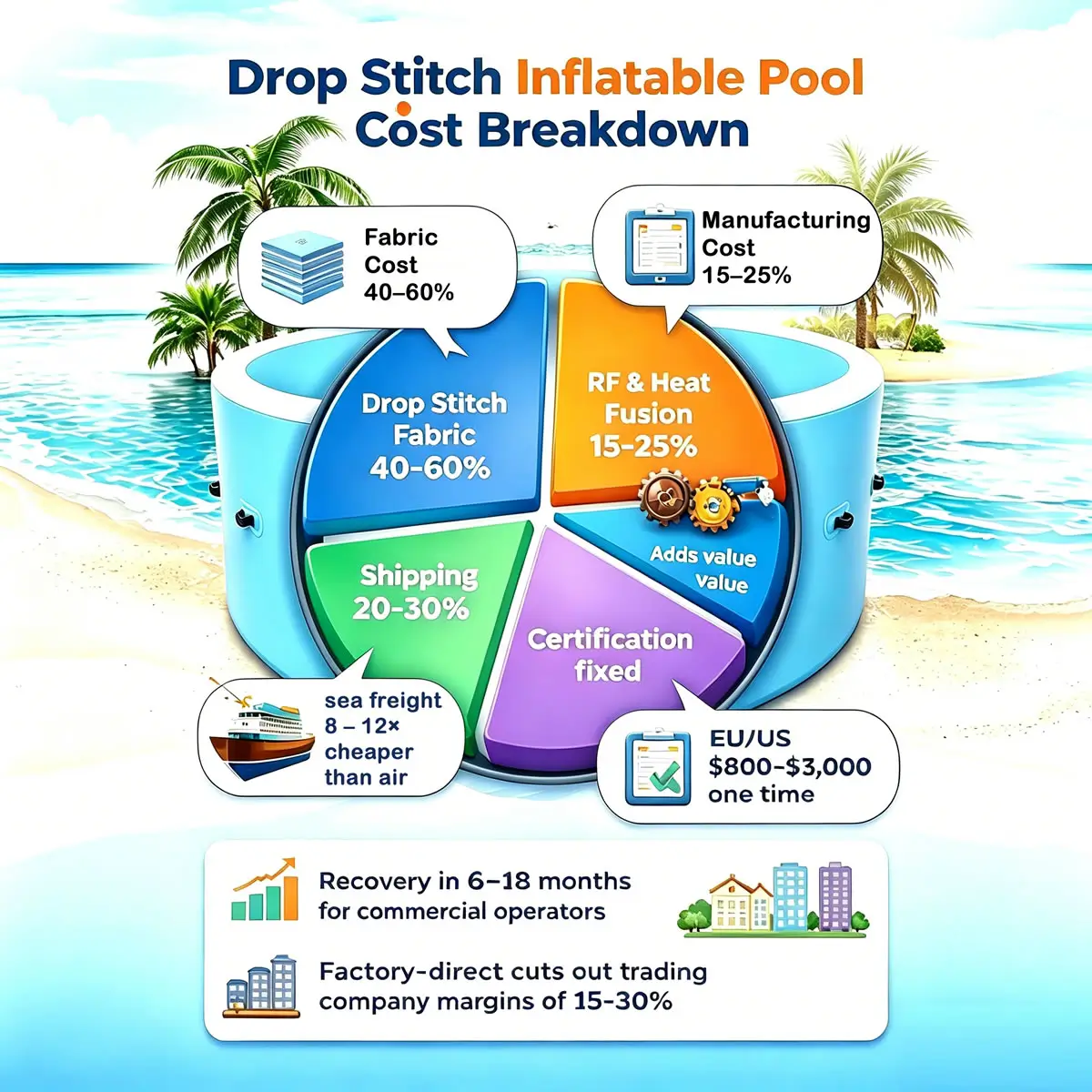
Drop stitch pool cost breakdown by component — factory production data
2. Raw Material Cost — Why Fabric Eats 40–60% of Your Budget
2.1 What Drop Stitch Fabric Is and Why It's Expensive
🧵 The fabric alone accounts for 40–60% of ex-factory price. That's not a rounding error — it's the single biggest lever in the entire cost structure. Unlike standard PVC, drop stitch fabric is a three-layer sandwich: two PVC-coated polyester sheets, connected by thousands of vertical polyester yarn threads. That internal structure is what keeps the pool walls rigid under pressure. For a full technical breakdown, see What Is Drop Stitch Technology?
Two specs drive cost more than anything else: PVC coating thickness and stitch density. Here's how they compare across grades:
| Specification | Entry-Level | Mid-Grade | Industrial Grade |
|---|---|---|---|
| PVC Coating Thickness | 0.6mm | 0.9mm | 1.0–1.2mm |
| Stitch Density | 2,700–3,200/m² | 3,500–4,200/m² | 4,500–5,000/m² |
| Max Operating Pressure | 6–8 PSI | 10–12 PSI | 13–15 PSI |
| Fabric Cost vs Entry-Level | Baseline | +35–55% | +80–120% |
| Typical Commercial Lifespan | 1–2 years | 3–4 years | 5–8 years |
ASTM D751 sets the standard test method for coated fabrics. It ties tensile strength directly to coating weight. Always ask for test reports. Industrial-grade PVC used in pressurized inflatables should clear 2,000 N/5cm tensile strength in both directions. If a supplier can't provide that data, move on.
Drop stitch fabric, as documented on Wikipedia, originated in kayak and paddleboard manufacturing. Adapting it to large pool formats meant solving much harder engineering problems — water load, continuous pressure, and outdoor exposure over years, not days.
2.2 PVC Resin Prices Fluctuate — Build That Into Your Contracts
⚗️ PVC resin tracks crude oil prices. Year-over-year swings of ±20–35% are normal. That means a factory quote from Q1 may not hold by Q3. If you're negotiating annual supply agreements, tie price adjustment clauses to a petrochemical index. It protects both sides.
Beyond base PVC, commercial pools often carry additional coating layers. These add 8–18% to raw material cost — but they're not optional for serious deployments:
- UV-resistant outer coating: adds 2–3 years of outdoor life in high-sun climates
- Cold-weather plasticizer: stops PVC cracking below -10°C — essential for northern Europe and high-altitude sites
- Anti-mildew treatment: silver-ion or zinc-based biostatic coating for humid tropical use
- Anti-slip surface: heat-embossed texture; costs $0.8–$2.5/m² extra
2.3 Order Volume Also Affects Pricing
Order volume reshapes pricing too. For a standard mid-size pool (200cm × 300cm × 65cm):
- Sample / 1–5 units: expect to pay 200–250% of volume price
- 10–20 units: price drops to 130–160% of volume pricing
- 50+ units: approaches true volume baseline
- 100+ units: custom mold and jig costs fully amortized — maximum efficiency
3. Manufacturing Cost — Welding, Labor, and Compliance
3.1 RF + Heat Fusion vs. Hand Glued + Adhesive
⚙️ Manufacturing sits at 15–25% of total drop stitch pool cost. The welding method is where the biggest quality gap hides. Two techniques dominate the market. They are not equal. For a side-by-side look at how pool types compare overall, see Drop Stitch Pool vs Traditional Inflatable Pool.
| Parameter | High-Frequency + Heat Fusion | Hand Glued + Adhesive |
|---|---|---|
| Seam Bond Strength | ≥ 90% of base material | 60–75% of base material |
| Production Speed | High — automated cycle | Low — manual, needs cure time |
| Leakage Rate at QC | < 2% defect rate (AQL 2.5) | 8–15% defect rate |
| Price Premium | +12–18% vs heat bonding | Baseline |
3.2 Labor, Overheads, and Custom Shapes
👷 Standard round or rectangular pools on semi-automated lines take 3.5–6 labor-hours per unit. Custom shapes — L-pools, overflow-edge designs, integrated steps — need 8–15 hours. Complex geometry means more hand-fitting, more welding passes, more QC checks.
Custom mold tooling costs $1,500–$8,000 upfront. Spread that over your run:
- 50 units: tooling adds $30–$160 per unit
- 500 units: tooling adds $3–$16 per unit
If you're planning OEM work, build tooling amortization into your landed cost model before you accept any quote.
3.3 Certification Costs — EU, US, and UK Markets
📋 Skip certification and you lose market access. It's that simple. EN ISO 25649 governs inflatable leisure articles in the EU. It sets burst pressure thresholds, seam strength minimums, and toxicity limits. REACH compliance means your PVC is free from four restricted phthalates (DEHP, DBP, BBP, DIBP) — each below 0.1% w/w.
The CPSC enforces ASTM F963 for inflatables in the US, including specific labeling and packaging rules. Budget by market:
- EU — EN ISO 25649 + REACH: $1,200–$2,500 (SGS / TÜV testing)
- US — CPSC / ASTM F963: $800–$1,800
- UK — UKCA (post-Brexit): $600–$1,200 additional
- Annual renewal / surveillance: $300–$600 per body
4. Shipping — The Hidden Cost Most Buyers Miss
4.1 "They Deflate" Doesn't Mean They Ship Cheap
🚢 Logistics is 20–30% of your total delivered cost. Most first-time importers don't expect that. Here's why it's higher than it looks: freight charges use the higher of actual weight or volumetric weight. The formula for air is L × W × H cm ÷ 5,000.
Take a 300cm × 200cm × 65cm pool. Deflated and boxed, it measures roughly 80cm × 60cm × 40cm and weighs 28–42 kg. Volumetric weight comes out at 38.4 kg. So the "light cargo" advantage you'd expect from an inflatable product? Mostly gone.
4.2 Sea vs. Air — A 10:1 Price Gap
🌊 For any B2B order above 10 units, sea freight wins. Per current Freightos Baltic Index data, air freight on China-to-Europe lanes runs $6–$14/kg. Sea freight runs $1.2–$2.8/kg. That's roughly an 8:1 to 12:1 cost gap.
| Shipping Mode | 20GP Container | 40HQ Container | Air Freight |
|---|---|---|---|
| Units (mid-size pool) | 80–120 units | 180–260 units | 1–10 units |
| Freight Cost (China → EU) | $1,800–$3,200 | $2,800–$4,800 | $180–$420/unit |
| Per-Unit Freight Cost | $15–$40 | $11–$27 | $180–$420 |
| Transit Time | 25–35 days | 25–35 days | 5–7 days |
The 40HQ container is the right call for volume orders. It gives you roughly 76 CBM versus 25 CBM in a 20GP. Talk to your factory about carton dimensions, pallet layouts, and folding method before finalizing your packing plan. A few centimeters can mean fitting 20 extra units per container.
4.3 Duties, Last-Mile, and Regional Surprises
🌍 Inflatable pool products fall under HS Code 9506.99 or 3926.90 depending on market classification. Duty rates by region:
- EU (MFN rate): 2.7–4.7% of CIF value
- UK (post-Brexit): 2.7–4.7% plus UKCA admin
- US: 3.4–5.3% plus any Section 301 tariffs on Chinese goods
- UAE / Saudi Arabia: 5% GCC customs duty
- Australia: 0–5% depending on FTA status
One more thing most quotes leave out: last-mile delivery. Pools over 200cm in any packaged dimension often need liftgate service or freight terminal collection. Add $80–$250 per delivery point in most developed markets. Ask about this before you finalize your landed cost.
5. Cheap vs. Premium — The Real Numbers
5.1 What Entry-Level Pools Actually Cost You
⚠️ A pool priced 40–60% below market is telling you something. That gap lives somewhere — usually in the PVC, the seams, or both. Based on returned-goods QC data, low-cost units fail in the same ways, every time:
- 0.6mm PVC coating: UV degradation and surface cracking starts at 8–14 months outdoors
- Adhesive seam bonding: peel failure spikes after the first winter storage cycle — thermal cycling breaks the bond
- No reinforcement straps: walls bow and lean above 7 PSI — a safety issue and a guest-experience issue
- Non-REACH PVC: potential product recall exposure in EU and UK markets
5.2 What to Actually Require from an Industrial-Grade Supplier
✅ Don't buy claims. Buy test reports. Before placing a volume order, ask for documents confirming each of the following:
- PVC coating weight: minimum 950 g/m² combined (both sides)
- Tensile strength: ≥ 2,000 N/5cm warp and weft — per ASTM D751
- Burst pressure: ≥ 3× rated operating pressure
- Seam peel strength: ≥ 100 N/5cm at joints
- UV resistance: ≥ 500 hours Xenon arc — no visible degradation
- REACH phthalate content: < 0.1% w/w per compound
5.3 The 3-Year Cost Comparison That Changes How You Buy
💸 The "cheaper" pool is usually the more expensive one. Here's why:
| Cost Item | Entry-Level Pool | Industrial-Grade Pool |
|---|---|---|
| Initial Unit Price | $320 | $680 |
| Replacements in 3 Years | 2× ($640) | 0× ($0) |
| Repair / Patch Costs | $180 | $40 |
| Downtime Revenue Loss | $1,200+ | $0–$150 |
| 3-Year Total Cost | $2,340+ | $720–$870 |
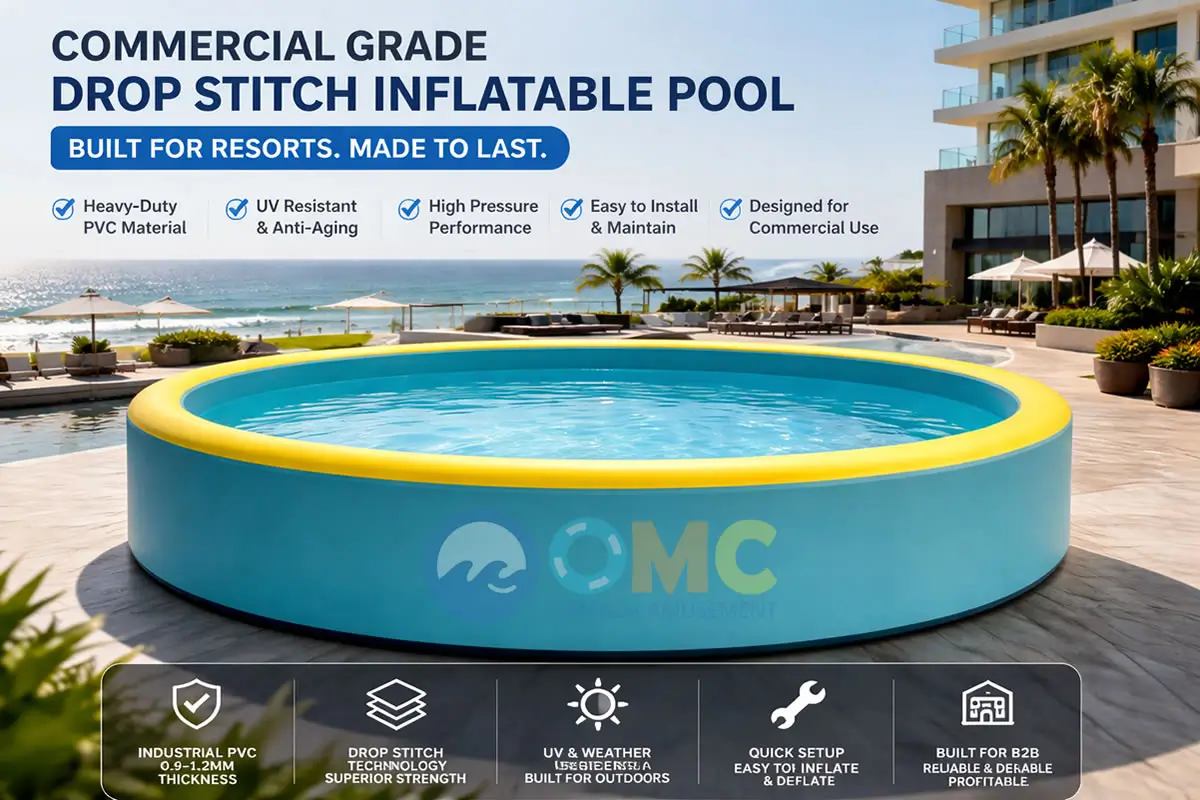
Industrial-grade drop stitch pool in commercial resort use — built to hold up, not just hold water
6. ROI — What Commercial Operators Actually Earn Back
6.1 Drop Stitch vs. Fiberglass vs. Concrete — Lifecycle Numbers
📊 A fiberglass pool installation — site prep, plumbing, filtration, fencing, permits — runs $22,000–$65,000 in Western markets. Concrete is $35,000–$100,000+. Installation takes 4–12 weeks. You need contractors, permits, and a fixed site.
A comparable drop stitch pool from an inflatable pool manufacturer in China costs $500–$3,000 factory-direct. Two people can set it up in 2–4 hours. No contractors. No permits. Over five years, when you factor in maintenance, filtration, chemicals, and storage, drop stitch construction wins by a factor of 6:1 to 15:1 on total cost of ownership.
For a full structural comparison, see Drop Stitch Portable Swimming Pools vs Fiberglass Pools.
6.2 How the Revenue Math Works for Hotels and Rental Operators
🏨 A 4m × 6m commercial drop stitch pool opens up real revenue lines. Here's what commercial operators typically see:
- Pool villa rate uplift: $80–$250/night premium for pool-access rooms
- Day-pass revenue: $15–$45/person at resort or glamping sites
- Event hire rate: $200–$600/day in urban rental markets
- Annual revenue days: 60–120 in temperate climates
At a conservative 40–50 days/year and $250/day, one pool generates $10,000–$12,500 gross annual revenue. A $1,500 pool pays for itself in 6–8 weeks of first-season use. For more deployment scenarios across hospitality and events, see Commercial Drop Stitch Pool Applications.
6.3 The Three Financial Wins That Permanent Pools Can't Match
🚛 You can move a drop stitch pool. That one fact unlocks three financial advantages no concrete or fiberglass pool can offer:
- No permits: saves $2,000–$15,000 in fees and 4–16 weeks of waiting in most markets
- Relocate anytime: underperforming at one site? Move it. A permanent pool has zero relocation value
- Near-zero storage cost: deflated, a full commercial pool packs into 0.3–0.8 m³ — no specialist facilities needed
7. Case Study — Eco Resort in Southeast Asia
7.1 The Problem: Six Pools on an Island, No Contractors
🌴 A boutique eco-resort on a Southeast Asian island needed pool infrastructure for six overwater bungalow units. The original plan was cast-in-place concrete plunge pools. The logistics were rough: materials had to come in by barge, skilled contractors weren't available on-island, and each unit would have taken 14 weeks to build — right through peak season.
After a deck load-bearing review, the project switched to round drop stitch pools — 600cm diameter × 100cm height, with 1.0mm industrial-grade PVC, UV coating, and anti-slip surface. Spec-appropriate for a permanent tropical outdoor deployment.
7.2 What the Numbers Looked Like Side by Side
💰 Here's the actual cost comparison for the 6-unit project:
| Cost Item | Concrete Plunge Pool | Drop Stitch Pool |
|---|---|---|
| Product cost (×6 units) | $28,000–$42,000 | $4,200–$5,800 |
| Transport to site | $8,000–$14,000 (barge) | $1,100–$1,800 (sea freight) |
| Installation labor | $12,000–$22,000 | $600–$1,200 (resort staff) |
| Permits and engineering | $4,500–$8,000 | $0 |
| Total (6 units) | $52,500–$86,000 | $5,900–$8,800 |
7.3 Six Months Later
📈 The pool bungalows outperformed every other unit on the property within the first operating season — about 22 weeks:
- Occupancy: pool bungalows hit 78% seasonal occupancy; standard units ran 52%
- Rate premium: pool units earned $95–$140/night more than comparable non-pool rooms
- Incremental revenue (6 units, 22 weeks): approximately $78,000–$112,000
- Full ROI: achieved within the first 8 weeks of operation
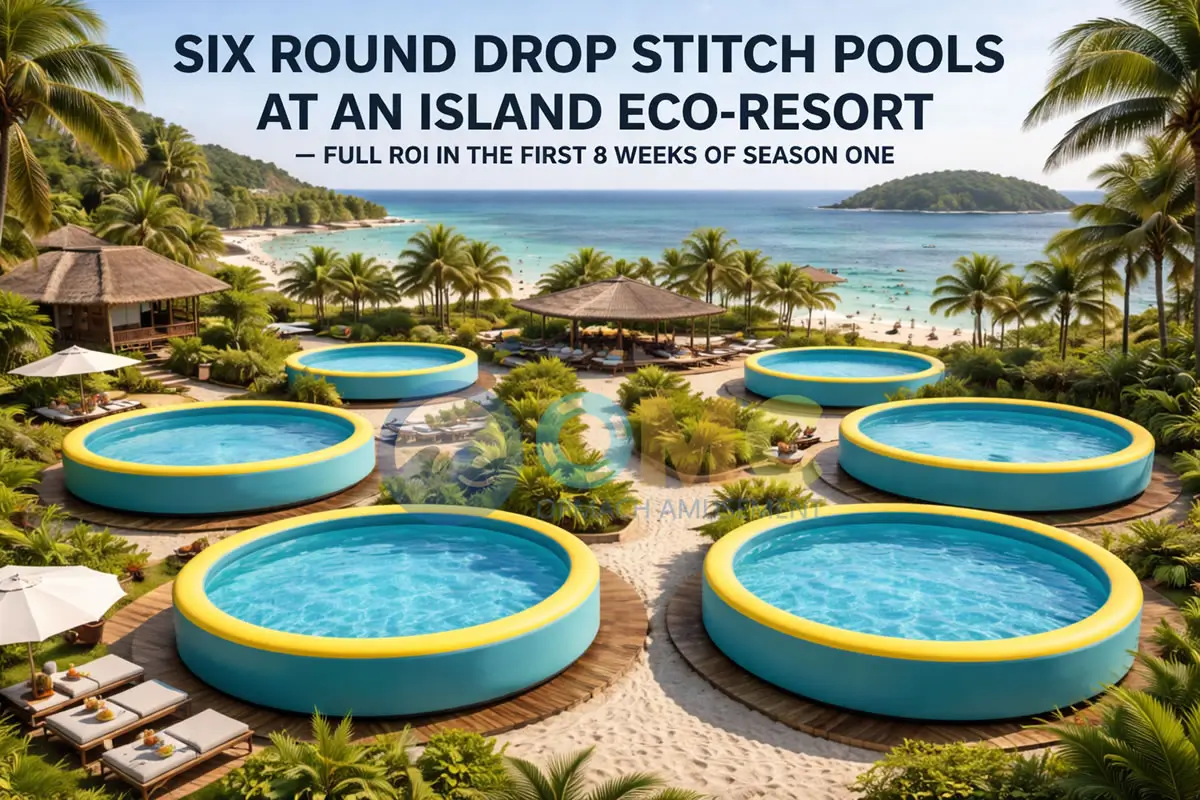
Six drop stitch pools at an island eco-resort — full ROI in the first 8 weeks of season one
8. FAQ — Drop Stitch Pool Cost Questions Answered
How much does a drop stitch pool cost per unit?
Factory-direct pricing for commercial drop stitch inflatable pools runs $280–$1,800+ per unit. Size, PVC thickness (0.6mm–1.2mm), reinforcement spec, and order volume all affect the number. MOQ tiers cut per-unit cost by 15–30% versus sample pricing. OEM branding, custom colors, or non-standard sizing adds 10–20% to the base unit price.
What is the minimum order quantity for factory pricing?
Standard sizes typically carry a MOQ of 10–50 units. OEM and custom shape orders usually start at 20–100 units to cover tooling. Hit the MOQ threshold and you unlock both volume pricing and tooling amortization — the two levers that drive per-unit cost down fastest.
How long do commercial drop stitch pools last?
Industrial-grade pools with 1.0mm–1.2mm PVC, UV-resistant layers, and double RF-welded seams hold up for 5–8 years in commercial use. Entry-level 0.6mm PVC products typically need replacing within 12–24 months under the same conditions. Proper storage and deflation protocol extends service life a further 20–35%.
Are drop stitch pools cheaper than fiberglass pools?
Yes — by a substantial margin. Fiberglass runs $20,000–$60,000+ installed. A comparable drop stitch pool at factory-direct pricing is $500–$3,000. Over a 5-year cycle, the total cost of ownership gap is 6:1 to 15:1 in favor of drop stitch, once you factor in installation, transport, maintenance, and storage.
What certifications do drop stitch pools need for EU and US markets?
EU sales require EN ISO 25649 compliance and REACH phthalate-free verification. US sales require ASTM F963 and CPSC compliance. Budget $800–$3,000 per product line per market for third-party testing through SGS, TÜV, or Bureau Veritas. This is a one-time cost, amortized across your production run.
What You're Really Paying For
🔑 Strip away the noise and drop stitch pool cost comes down to four numbers:
- 🧱 40–60% — Drop stitch fabric (PVC grade, stitch density, reinforcement)
- ⚙️ 15–25% — Manufacturing (HF + Heat Fusion, labor, QC, custom tooling)
- 🚢 20–30% — Logistics (sea freight, duties, last-mile delivery)
- 📋 5–10% — Certification, packaging, and compliance
📩 Get a factory price list, custom size quote, or spec sheet for your project. Our export team replies within 24 business hours.
🌟 OMC Amusement makes high-pressure inflatables for global B2B brands. Buy direct from our factory to get wholesale pricing with zero middleman fees. We deliver most custom orders in 15 to 40 days with a proven 99.8% quality pass rate.
💼 Our Core Product Categories
- Drop-Stitch Lines: Heavy ice bath tubs, drop stitch swimming pools, inflatable yachts, docks, and floating platforms.
- Water Park Lines: Large lake parks, floating obstacle courses, and inflatable castles.
📬 Get a Factory-Direct Quote Within 24 Hours
Ready to update your inventory or build a custom pool? Contact our engineering desk right now for a fast reply.
- 📧 Email: info@omcplay.com
- 📲 WhatsApp / Tel: +86 15638116754