📑 Table of Contents
- 1. The Build Decides How Much Work You'll Do
- 2. What Maintenance Actually Looks Like, Day to Day
- 3. Getting Water Chemistry Right
- 4. Cleaning It the Right Way
- 5. Managing Air Pressure as Temperatures Shift
- 6. What Lifespan Means for Your Bottom Line
- 7. Storing It Right When the Season Ends
- 8. Frequently Asked Questions
Yes, drop stitch pool maintenance is real — but it's lighter than you'd think. Our after-sales data shows it takes up to 60% less work than a standard PVC inflatable or a rigid permanent pool.
Here's why. Traditional inflatables stretch over time. Seams fatigue. Walls sag. A drop stitch inflatable pool doesn't have that problem. The high-pressure double-wall fabric (DWF) core holds its shape under load, season after season. So instead of fighting structural sag, your team just handles two things: water chemistry and seasonal PSI checks. That's it.
- Structural care: Almost none. Just check air pressure when temperatures swing.
- Water management: Same as any commercial pool. Watch pH, chlorine, and alkalinity.
- Material toughness: Built from marine-grade 1000D PVC. It shrugs off punctures, abrasion, and UV exposure even on high-traffic commercial sites.
1. The Build Decides How Much Work You'll Do
Want to know why a drop stitch pool behaves so differently from a cheap inflatable? Look inside the wall.
Standard inflatables rely on unsupported vinyl bladders. Water weight stretches them. Stress piles up on the welded seams. The pool slowly creeps out of shape — and you end up re-inflating, repositioning, and patching far more than you'd like.
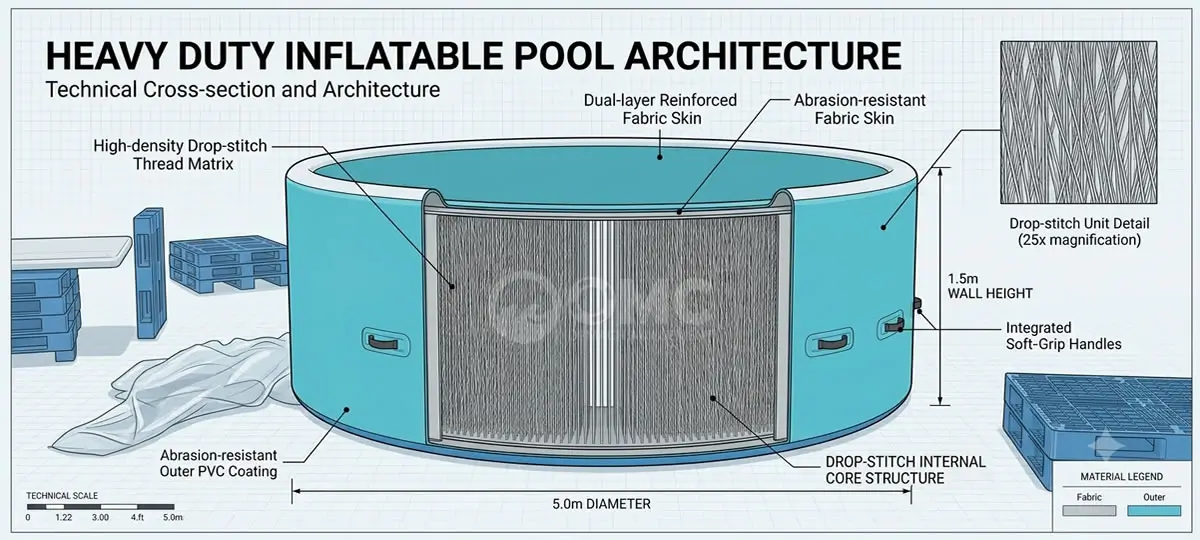
How Drop Stitch Construction Actually Works
A real drop stitch technology core is built from tens of thousands of high-tensile 1000D polyester filaments. They're woven tight between two base layers. Pressurize it, and those threads snap into place. The fabric stops behaving like fabric — it turns rigid, almost like a solid panel.
The outer shell adds another layer of protection. Multiple coats of marine-grade 0.9mm PVC go on top, each carrying UV-inhibitors and anti-microbial treatment. Outside water pressure pushes in. Internal tension pushes back. They cancel out. That balance is the whole secret.
Why Less Movement Means Less Maintenance
No internal movement, no wall distortion. Drop stitch threads keep the side walls locked in place, even under heavy daily use. EN ISO 25649 — the international standard for inflatable water craft — backs this up: structural stability cuts lateral stress on the perimeter seams. For distributors, that means fewer complaints, fewer sagging walls, and far less warranty exposure than legacy inflatable products bring.
2. What Maintenance Actually Looks Like, Day to Day
Running a drop stitch inflatable pool across a resort, a rental fleet, or your own product line? Skip the guesswork. Here's the checklist our fleet clients actually use.
What We See From the Factory Floor
We've built Drop Stitch inflatable pools and water sports gear for over 18 years now. We've shipped thousands of units to distributors, resorts, rental operators, and private-label brands across Europe, Australia, North America, and the Middle East.
One question comes up constantly: "How much maintenance does a Drop Stitch pool actually need?"
Honestly? Not much. The structure itself barely asks for anything. Most support tickets we get trace back to water management, not the pool material itself.
Pull our after-sales numbers and you'll see it clearly: over 70% of inquiries are about water quality — algae, cloudy water, chemical imbalance. Structural issues like air leaks or seam damage? Under 10%.
That gap is the whole point of Drop Stitch technology. Traditional inflatables lean on big air chambers and flexible walls. Ours doesn't. It builds a rigid, high-pressure structure that holds its shape through continuous use.
Every pool that leaves our factory goes through a 48-hour pressure retention test first. Built right, these pools hold stable pressure for weeks. Only minor seasonal tweaks needed after that.
Our standard advice for commercial buyers comes down to three habits:
- Check water quality daily.
- Verify air pressure weekly.
- Run a full clean and inspection monthly.
Stick to that, and most of our customers get years of trouble-free use without much maintenance spend at all.
Maintenance Schedule at a Glance
| Frequency | What to Check | How to Do It |
|---|---|---|
| Daily | Water quality & debris | Skim leaves. Check free chlorine. Scan for basic safety issues. |
| Weekly | Filtration & balance | Backwash sand filters or rinse cartridges. Scrub waterlines with soft tools. |
| Monthly | Valves & pressure logs | Check PSI with a calibrated gauge. Clean high-traffic exterior surfaces. Inspect valves. |
3. Getting Water Chemistry Right
A lot of overseas buyers ask us the same thing: can a heavy duty inflatable pool actually handle normal pool chemicals? Short answer — yes. Premium drop-stitch builds use a reinforced polyurethane or premium PVC top coat. Standard commercial chemicals won't touch it. Get the balance right, and you'll dodge scale buildup and staining on the liner entirely.
Keep These Numbers in Your Logbook
We follow the same guidelines the Pool & Hot Tub Alliance (PHTA) sets for any commercial pool. Three numbers matter most:
- pH: Hold between 7.2 – 7.6. Go outside this range and you risk skin irritation, plus slow damage to the PVC coating.
- Free Chlorine: Stay between 1.0 – 3.0 ppm. Enough to sanitize, not enough to bleach the material.
- Total Alkalinity: Keep steady at 80 – 120 ppm. This stops your pH from swinging wildly day to day.
Picking the Right Filter
Mid-size and larger setups — think a commercial drop stitch plunge pool — need a cartridge or sand filter to clear particulates. Going saltwater instead? Make sure every metal fitting is true 316 stainless steel. Anything less corrodes fast in a chlorinated, high-salt environment.
Stopping Algae Before It Starts
Stagnant water plus direct sun equals algae, fast. We tell every client the same thing: run your filter 8 to 12 hours a day during peak season. If you hit a sudden spike in occupancy, shock the pool overnight with sodium hypochlorite and leave it uncovered so the gas can vent off safely. To ensure reliability across all seasons, consult our Drop Stitch Pool Year Round Use strategy guide.
4. Cleaning It the Right Way
Cleaning a drop stitch inflatable pool isn't hard, but it does need the right tools. Grab a harsh scraper or an industrial solvent and you'll strip the protective coating, void your warranty, and expose the core threads to UV damage. Not worth it.
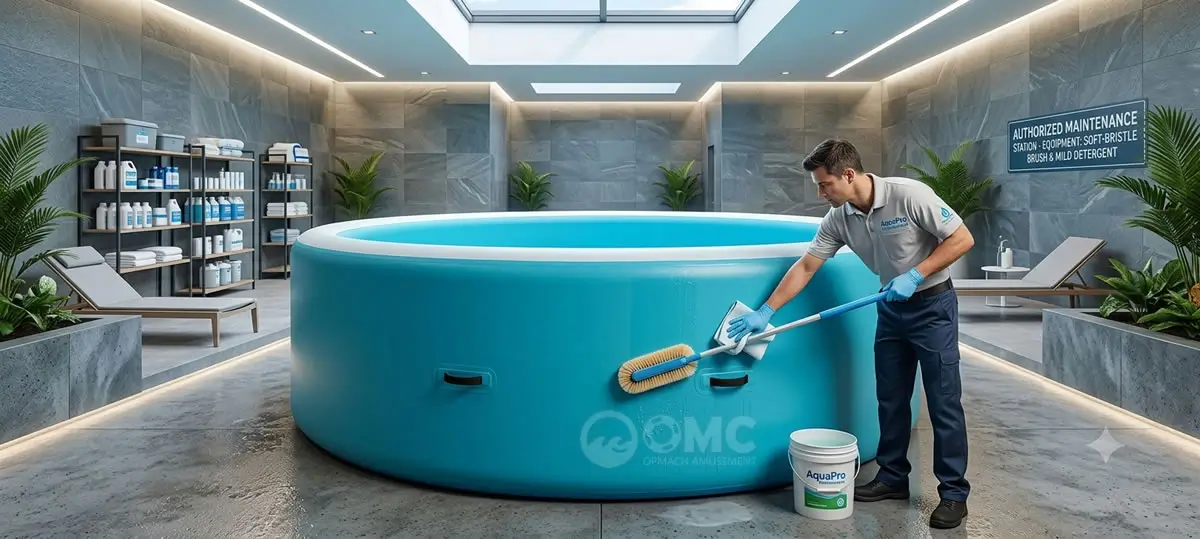
Cleaning the Interior
Stick to a soft-bristled brush or an open-cell melamine pad. Work in wide circles across the floor and walls. Never bring a power washer within 30cm of the surface — that jet of water can cut or peel the PVC coating clean off.
Cleaning the Outside
Outdoor pools pick up body oil, sunscreen, and airborne grime around the top rim. A mild dish soap solution handles most of it, or use a pH-neutral marine vinyl cleaner if you want something purpose-built. Rinse with fresh water afterward — leftover soap residue bakes into the surface under direct sun and gets harder to remove every day you wait.
Sourcing in bulk? Working directly with an experienced inflatable pool manufacturer in China gets you factory-tested cleaning kits and guidelines built specifically for your product line, not generic advice pulled from a manual.
5. Managing Air Pressure as Temperatures Shift
Standard inflatables run on minimal air pressure. Drop stitch pools don't. They need real internal pressure to stay rigid — which means pressure checks aren't optional here. They're part of the job.
How Much PSI Does a Drop Stitch Pool Actually Need?
Most commercial units run safely between 5.0 and 10.0 PSI, depending on wall thickness and what your manufacturer specifies. Too little pressure, and the walls buckle under water weight — seams take the strain instead. Too much, and you risk tearing the internal drop-stitch threads themselves.
Why Pressure Changes With the Weather
Gay-Lussac's Law explains it simply: gas pressure rises and falls with temperature. Every 10°C shift moves your internal pressure by roughly 0.6 to 0.8 PSI. In practice, that plays out two ways:
- Midday sun heats the air inside, pushing pressure up.
- Cool nights shrink that same air volume, dropping pressure back down.
Check pressure during peak sun hours — that's when problems show up first. We also recommend installing an over-pressure relief valve on any fleet unit. It releases excess air automatically before internal limits get crossed, so you're not relying on someone remembering to check a gauge at noon. Review the Drop Stitch Inflatable Pool Strength reference manual for detailed pressure limits across varied climates.
6. What Lifespan Means for Your Bottom Line
For resort operators and rental fleets, a commercial pool purchase is a capital investment, plain and simple. The real question isn't the sticker price — it's what maintenance labor costs you against how long the unit actually lasts.
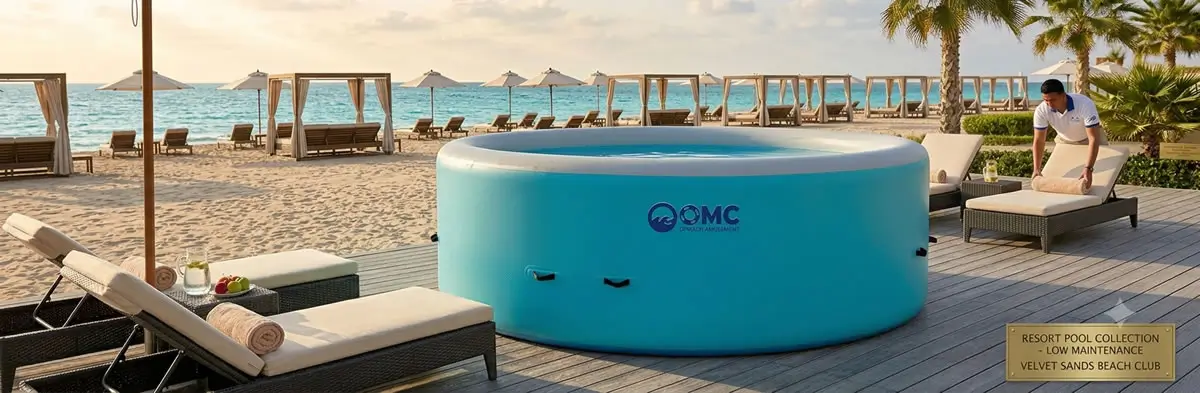
Lifespan, Side by Side
Properly maintained, a premium drop-stitch pool runs 5 to 8+ years in heavy commercial use. Standard inflatables or basic PVC pools? Most need replacement or major repair within 1 to 2 seasons — the stretching and seam failure catches up fast.
| Performance Indicator | Standard Commercial Inflatables | Premium Drop Stitch (DWF) Pools |
|---|---|---|
| Average Lifespan | 12 – 24 Months | 60 – 96+ Months |
| Structural Upkeep | High (frequent sagging, re-inflation) | Minimal (holds shape via stable core) |
| Warranty Claim Rates | 8% – 15% annually | Under 1.5% with proper care |
Buy durable equipment once, and you cut your replacement cycles way down. Fewer warranty headaches, smoother fleet operations, and a brand reputation that doesn't take a hit every time a pool fails mid-season. Discover more in our Drop Stitch Pool Lifespan analysis.
7. Storing It Right When the Season Ends
Off-season storage either protects your investment or quietly ruins it. Get it wrong and you're looking at material cracking, crease damage, or mold — none of it cheap to fix.
Four Steps to Store a Drop Stitch Pool for Winter
- Drain it completely. Open every drain valve fully and clear the plumbing ports.
- Wash with biocide. Scrub interior surfaces with an anti-fungal cleaner to strip out organic buildup.
- Dry it out fully. Let the uninflated structure air out in a ventilated space for 24-48 hours. Never fold damp vinyl — that's how mold takes hold.
- Roll it loosely. Skip tight creasing. Roll the fabric around a smooth core tube instead, and store it somewhere temperature-controlled — between 10°C and 30°C works best.
Fixing a Puncture in the Field
Something punctured the outer skin? Your crew can fix this with a standard cold-weld patch. Clean around the puncture with methyl ethyl ketone (MEK) or high-purity isopropyl alcohol first. Apply a thin layer of polyurethane adhesive to both the pool surface and the patch material. Give it 3-5 minutes to tack, then press the pieces together firmly. Roll it with a heavy roller to push out any trapped air. Let the patch cure for a full 24 hours before you re-inflate — rushing this step is the single most common mistake we see in the field. For a complete look at alternative commercial pool solutions, read our breakdown on Drop Stitch vs Fiberglass Pools.
8. Frequently Asked Questions
Q1: How often should you clean a drop stitch pool?
Skim floating debris every day. Give the interior walls a soft-brush clean weekly to keep biofilm and algae from building up. Once a month, run a deeper clean with an approved vinyl cleaner.
Q2: Can I leave a drop stitch inflatable pool outside through winter?
The heavy-duty components themselves handle freezing temperatures fine. The water doesn't. Leave a pool filled in freezing weather and you risk serious freeze-expansion damage. In cold regions, drain it, dry it, and store it indoors.
Q3: Will standard chlorine tablets damage the drop stitch material?
No — marine-grade PVC and polyurethane coatings handle normal chlorine levels without issue. Just don't drop concentrated tablets straight onto the pool floor. That bleaches and weakens the material over time. Use a floating dispenser or inline chlorinator instead.
Q4: What happens if a drop stitch pool is over-inflated?
Over-inflation puts heavy strain on the internal drop-stitch threads and the seams around them. Push past the limit, and filaments can snap — leaving permanent wall bulges behind. A reliable pressure gauge is cheap insurance against this.
🌟 OMC Amusement makes high-pressure inflatables for global B2B brands. Buy direct from our factory to get wholesale pricing with zero middleman fees. We deliver most custom orders in 15 to 40 days with a proven 99.8% quality pass rate.
💼 Our Core Product Categories
- Drop-Stitch Lines: Heavy ice bath tubs, drop stitch swimming pools, inflatable yachts, docks, and floating platforms.
- Water Park Lines: Large lake parks, floating obstacle courses, and inflatable castles.
📬 Get a Factory-Direct Quote Within 24 Hours
Ready to update your inventory or build a custom pool? Contact our engineering desk right now for a fast reply.
- 📧 Email: info@omcplay.com
- 📲 WhatsApp / Tel: +86 15638116754