📑 Table of Contents
- 1. What Is Drop Stitch Technology?
- 2. Components of Drop Stitch Material
- 3. Drop Stitch vs Traditional Inflatable Construction
- 4. Why Drop Stitch Technology Is Ideal for Inflatable Pools
- 5. Types of Drop Stitch Technology
- 6. How Drop Stitch Pools Are Manufactured
- 7. Common Applications of Drop Stitch Technology
- 8. Frequently Asked Questions
Drop stitch technology connects two PVC-coated fabric sheets with tens of thousands of internal polyester threads. When you pump it up to 6–15 PSI, those threads hold the walls flat and firm — like a hard shell, but still foldable. It powers modern drop stitch inflatable pools, SUP boards, inflatable docks, and ice baths.
🔑 Key Points at a Glance
- Internal threads allow 6–15 PSI — up to 10× more than standard inflatables
- PVC coating comes in three grades: single-layer, double-layer, and fusion-bonded
- Woven drop stitch is stiffer and lighter than knitted drop stitch
- Every pool must pass a mandatory 24-hour air leakage test before it ships
- Used commercially in resorts, theme parks, glamping, and rental fleets
- Folds flat for shipping; two people can set it up in under an hour
- Commercial service life: 5–10 years with fusion-bonded PVC fabric
🔬 What Is Drop Stitch Technology?
Definition of Drop Stitch Construction
Drop stitch construction builds what the industry calls Double Wall Fabric (DWF). Picture two flat PVC-coated polyester sheets — one on top, one on the bottom. Now imagine thousands of vertical polyester threads stitched between them. That's it. The threads are literally "dropped" between the layers during production, giving the fabric its name.
Those threads are not decorative. Polyester fiber in this grade carries a tensile strength of 700–900 MPa. Under pressure, each thread acts like a tiny tie-rod. A commercial pool panel typically packs in 8,000 to 20,000 threads per square metre, depending on the grade.
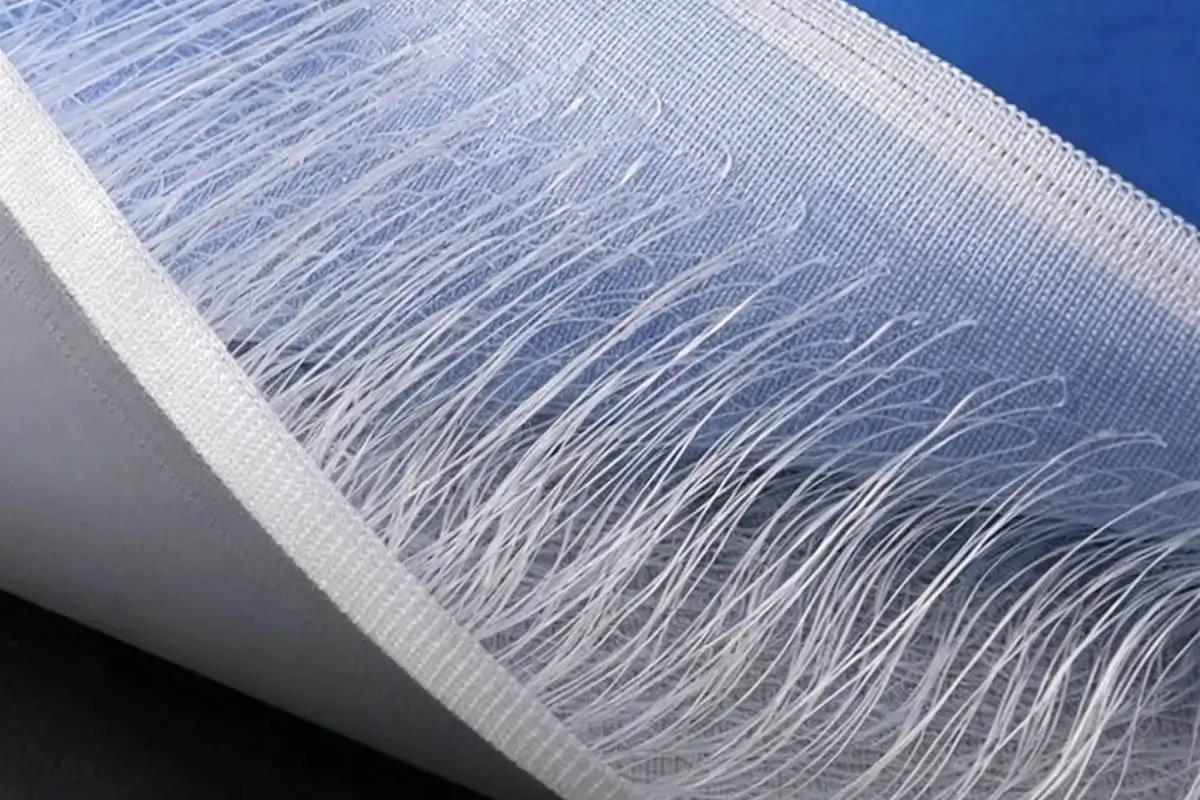
Want to see how this translates into a finished product? Our guide on what is a drop stitch pool and how does it work walks through it step by step.
How Does Drop Stitch Technology Work?
Before inflation: The fabric is soft. The two sheets sit nearly flat. The whole thing folds into a bag you can carry.
During inflation: Air pushes the two sheets apart. Each thread stretches to its full length and pulls tight — like a tent peg holding a canvas in place. At rated pressure, tens of thousands of threads lock the structure in shape. The walls stay flat. The floor stays flat. Nothing bulges.
That's the key difference from a normal inflatable. A plain air bladder just expands in every direction. Drop stitch construction stops that. It's why these pools can hold 6–15 PSI — or up to 25 PSI for SUP boards — when standard inflatables barely manage 0.5–2 PSI.
🧱 Components of Drop Stitch Material
Top and Bottom Base Fabric
Each outer face is a woven polyester substrate coated with PVC. The weave handles the tensile load that air pressure creates. For commercial pools, the base fabric typically uses a 1,000–1,500 denier polyester warp. That's what gives it tear and burst resistance.
High-Tensile Connecting Threads
These threads do the structural work. Research on polyester fiber properties shows a tensile modulus of 10–15 GPa — stiff enough to maintain shape across thousands of inflation cycles. In practice, the threads set the panel thickness at a fixed dimension:
- 10 cm — shallow pool walls, ice bath tubs
- 15 cm — standard backyard pool walls
- 20 cm — commercial pool sidewalls
- 25 cm — deep commercial pools, large-format installations
PVC Coating Layers — Comparison
| Coating Grade | Durability | Weight | Cost | Best For |
|---|---|---|---|---|
| Single Layer | Medium | Light | Low | Consumer / seasonal pools |
| Double Layer | High | Medium | Medium | Commercial pools, rental |
| Fusion (Hot-Laminated) | Very High | Light | High | Premium SUP, long-term sites |
Choosing between PVC and TPU coating? Our material deep-dive on PVC vs TPU drop stitch fabric covers the tradeoffs in full.
⚖️ Drop Stitch vs Traditional Inflatable Construction
The gap is wide. Look at the numbers side by side.
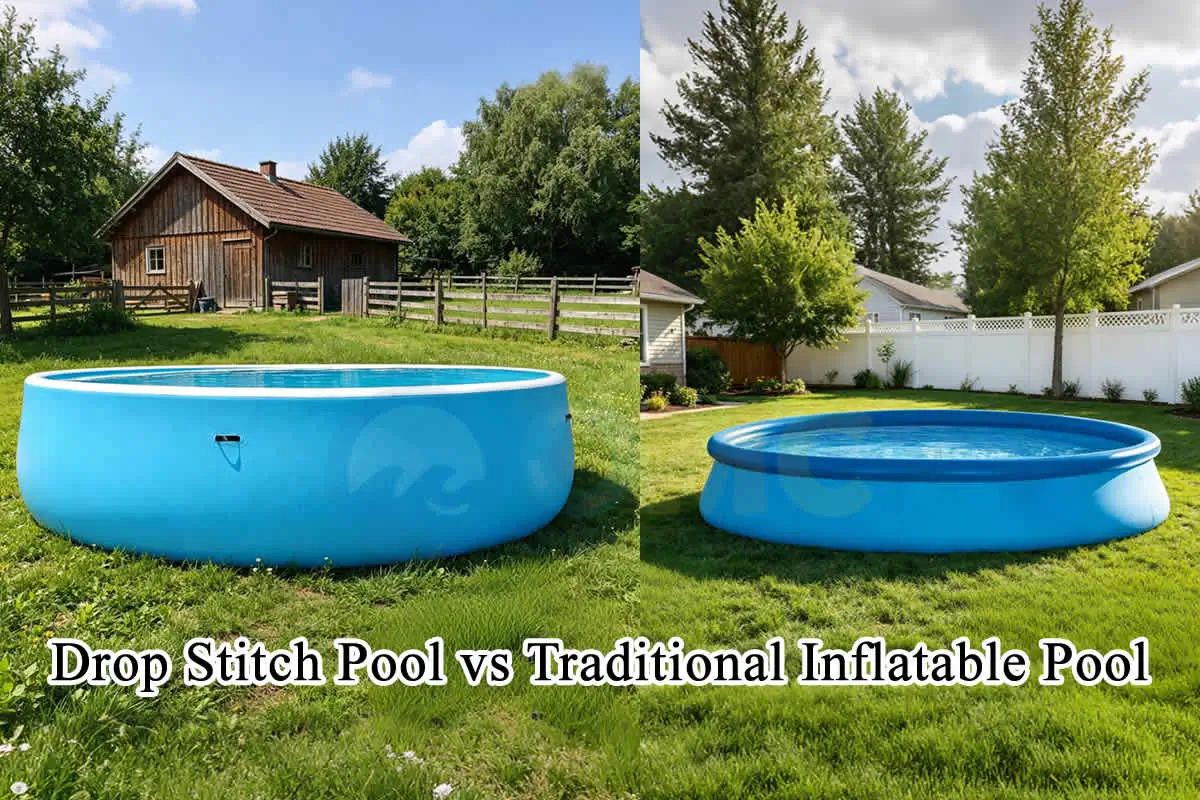
| Feature | Traditional Inflatable | Drop Stitch Pool |
|---|---|---|
| Working Pressure | 0.5–2 PSI | 6–15 PSI |
| Wall Rigidity | Low | High |
| Wall Shape Under Load | Curved / bulging | Straight / vertical |
| Water Depth | Limited | Greater |
| Service Life (Commercial) | Shorter | 5–10 years |
| Visual Finish | Basic | Premium |
| Commercial Track Record | Rare | Standard |
| Internal Thread Matrix | None | 8,000–20,000 threads/m² |
Safety specs for inflatable recreational products — including pressure ratings and seam integrity — fall under ASTM International frameworks such as ASTM F1918. If you're buying commercial pools, ask your supplier for test documentation against ASTM or equivalent EN standards.
Need a fuller picture? Our breakdown of drop stitch pool vs steel frame pool covers the structural and cost differences in detail.
🏊 Why Drop Stitch Technology Is Ideal for Inflatable Pools
Stronger Pool Walls
With a normal inflatable, the walls push outward when the pool fills with water. The shape goes soft. With drop stitch construction, the internal threads stop that from happening. The walls stay vertical. The geometry holds — even under a full water load.
Greater Water Capacity
Vertical walls mean the pool actually holds the volume printed on the spec sheet. A drop stitch pool can run 15 cm deeper than a same-size traditional inflatable at similar conditions. That extra depth matters for kayak training, swim lessons, and water-play setups.
Portable Yet Rigid
Deflated, a drop stitch pool folds down to roughly 2–5% of its inflated size. It fits in a cargo van. Two people can set it up and pump it to pressure in under 30 minutes. No concrete. No cranes. No permits.
Where Buyers Use It
- 🏡 Backyard Pools — high-end seasonal residential setups
- 🏨 Resort & Hotel Pools — overflow or seasonal capacity
- 📦 Pool Rental Fleets — repeated setup cycles across the season
- ⛺ Glamping Projects — boutique outdoor stays
- 🎪 Event Pools — activations, competitions, festivals
See the full picture in our guide to commercial applications of drop stitch pools.
🛠️ Field Note 18 Years Building Inflatable Pools
We've been making inflatable pools for over 18 years. Big-diameter projects teach you things a spec sheet never will. The real challenge isn't building a 25-metre pool. It's keeping it round — under full water load, day after day.
On one 25-metre kayak pool project, our first inflation test looked fine. No seam failures. But walk the perimeter and you'd see it: a slight oval shape, a few outer-ring sections pushing out further than the rest. Not a catastrophic problem. A precision one.
We tracked it down to two things. First, the tension along the outer ring wasn't even — some zones were pulling harder than others. Second, thread density at a few panel junctions was slightly lower than the rest. Small gaps. Big effect at that scale.
We made three changes. We raised the thread density in the high-load ring zones. We rerouted the RF welding path into a continuous closed loop so stress wouldn't concentrate at seam endpoints. And we added a mandatory post-fill test — measuring the ring at six points over 24 hours before sign-off. The pool passed. It's been running true ever since.
What that project taught us: a large circular drop stitch pool stays stable because of how its ring load is balanced — not because the fabric is thick. Specifying heavier material without fixing the load path doesn't help.
We later used the same approach for a theme-park client's 25-metre kayak attraction. The installation only took a few hours. At peak season, that pool brought in roughly 3,000 US dollars per day. It became the park's top footfall driver. Guests stayed longer. Nearby vendors saw more traffic. The pool paid for itself fast — not because it was big, but because it was reliable enough to run every single day.
🔩 Types of Drop Stitch Technology
Knitted Drop Stitch
In knitted drop stitch, the internal threads are looped into the top and bottom layers through a knitting process. It's cost-effective and widely used in consumer products. The pressure ceiling is around 10 PSI. Weight isn't a primary concern here — accessibility and price are.
Woven Drop Stitch
Woven drop stitch locks the threads directly into a woven substrate. The result is a stiffer structure at the same fabric weight. Test data puts the rigidity-to-weight improvement at 15–25% over knitted at the same PSI. That's why woven drop stitch goes into premium SUP boards and commercial pools where every millimetre of shape retention matters. It costs more to make. For the right application, it's worth it.
🏭 How Drop Stitch Pools Are Manufactured
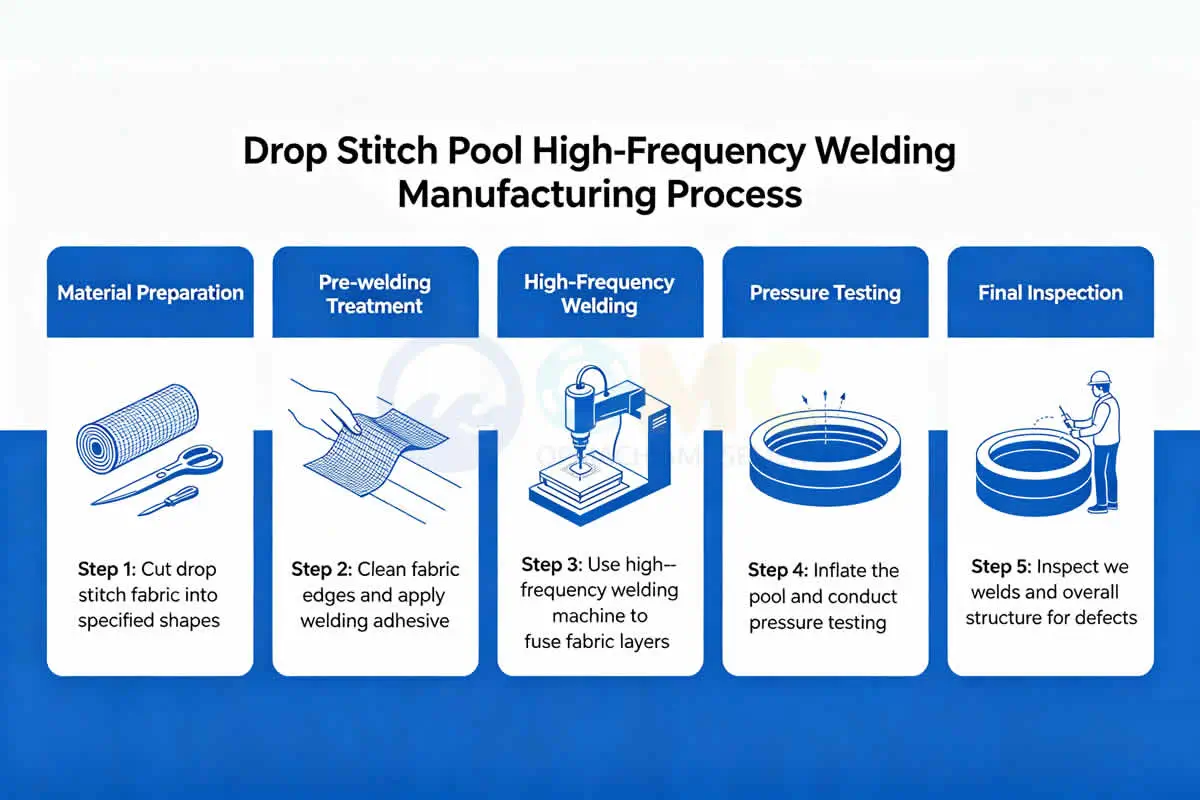
At our factory — a certified inflatable pool manufacturer — every pool goes through seven stages. Each stage must clear documented quality criteria before the next one starts.
Every incoming fabric roll is checked for coating consistency, thread density, and layer separation. Rolls that fail are pulled before cutting starts — not after.
CNC equipment cuts each panel to ±2 mm tolerance from CAD patterns. Consistent panel size is what keeps seams aligned and walls straight in the finished pool.
RF welding fuses the PVC layers together at a molecular level. The seam ends up stronger than the parent material. Adhesive bonding can't match that.
A PVC tape overlay goes over every load-bearing seam. This spreads the stress over a wider bond area. It's the step that stops seams from peeling back under water pressure.
Each unit sits at rated pressure for a full 24 hours. We track pressure drop and measure the walls at six points. Any unit outside spec goes back to welding — no exceptions.
A burst test confirms the pool holds safely above its rated PSI. Over-inflation in the field is common. This step ensures it won't cause a seam failure when it happens.
Passed units are deflated, folded in a set sequence, and bagged in moisture-resistant packaging. Full inspection paperwork ships with every unit.
OEM or ODM buyer? Our custom drop stitch pool manufacturing guide explains what you can change at each stage.
🌐 Common Applications of Drop Stitch Technology
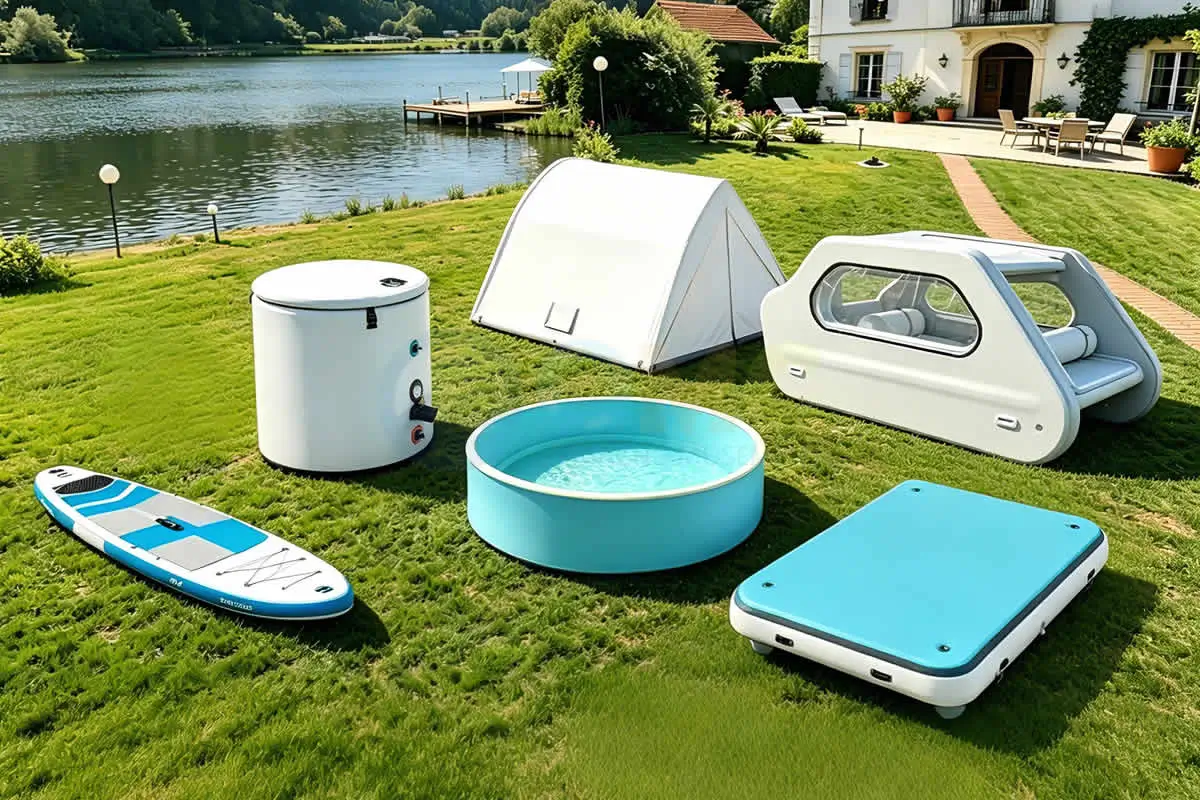
Drop stitch started with SUP boards. Today the technology shows up in a much wider range of products — all built on the same thread-and-fabric principle.
- 🏊 Drop Stitch Pools — rectangular, round, and custom shapes for backyard, resort, rental, and event use
- 🏄 Inflatable SUP Boards — the original application; 15–25 PSI working pressure
- 🛟 Floating Platforms & Pontoons — load-bearing water surfaces for sports, film, and marine events
- ⚓ Inflatable Docks — modular dock systems for marinas and waterfront venues
- 🧊 Ice Baths & Cold Plunge Tubs — rigid walls without an external frame
- 🚒 Rescue & Emergency Equipment — fast-deploy water platforms and flood barriers
- 🪖 Military Applications — river-crossing platforms and forward-base water storage
❓ Frequently Asked Questions
Q: What is drop stitch material made of?
Two layers of PVC-coated polyester fabric, connected internally by thousands of polyester threads. The PVC coating comes in three grades: single-layer, double-layer, or fusion-bonded. The right grade depends on how long and how hard the product will be used.
Q: How much pressure can drop stitch products hold?
Most drop stitch pools run at 6–15 PSI. Standard inflatables cap out at 0.5–2 PSI. High-end woven drop stitch SUP boards can reach 25 PSI.
Q: Is drop stitch stronger than standard PVC inflatable construction?
Yes. The internal thread matrix stops the walls from pushing out under pressure. A plain PVC bladder has no such restraint — the walls curve and the floor sags. Drop stitch holds its shape.
Q: Why are drop stitch pools more expensive?
The double-wall fabric costs more than single-layer PVC. Add CNC cutting, RF welding, seam reinforcement, and a 24-hour leak test — the unit cost is higher. For commercial buyers, the longer lifespan offsets that cost over time.
Q: How long do drop stitch pools last?
Fusion-bonded or double-layer pools in commercial use typically last 5–10 years. Single-layer versions hold up for around 3–5 years under similar conditions.
Q: Are drop stitch pools suitable for commercial use?
Yes — and that's exactly where they're most common. Resorts, theme parks, glamping operators, and rental fleets all use them. The high working pressure and rigid walls handle constant water loading and repeated setup cycles far better than standard inflatables.
📌 Final Thoughts
Drop stitch technology changed what inflatable products can do. It took a product category defined by softness and gave it the structural properties of a hard shell — without losing the portability that makes inflatables commercially viable in the first place.
For brands and buyers, the technology itself is now table stakes. What separates a good pool from a poor one is what happens at each production step — fabric grade, weld quality, seam reinforcement, and how rigorous the factory's testing actually is. Those details determine whether a pool runs reliably for a season or for a decade.
🏗️ Work With OMC Amusement
OMC Amusement is a China-based inflatable pool manufacturer in China with over 15 years of focused experience in inflatable design and production. We work directly with brands, distributors, and OEM/ODM buyers worldwide.
We support full customisation — dimensions, branding, valve layout, packaging — with factory-direct pricing. Our range covers everything from compact 3×2 m backyard pools to 25-metre commercial installations.
📩 Ready to source or build your own drop stitch pool line? Talk to our team. Tell us your spec. We'll handle the rest.
🌟 OMC Amusement makes high-pressure inflatables for global B2B brands. Buy direct from our factory to get wholesale pricing with zero middleman fees. We deliver most custom orders in 15 to 40 days with a proven 99.8% quality pass rate.
💼 Our Core Product Categories
- Drop-Stitch Lines: Heavy ice bath tubs, drop stitch swimming pools, inflatable yachts, docks, and floating platforms.
- Water Park Lines: Large lake parks, floating obstacle courses, and inflatable castles.
📬 Get a Factory-Direct Quote Within 24 Hours
Ready to update your inventory or build a custom pool? Contact our engineering desk right now for a fast reply.
- 📧 Email: info@omcplay.com
- 📲 WhatsApp / Tel: +86 15638116754