📑 Table of Contents
- 1. Core Conclusion: Shape Determines Pressure Bearing Capacity of Drop-Stitch Pools
- 2. Fundamental Fluid Pressure & Structural Stress Theory for Inflatable Containers
- 3. Structural Defects of Rectangular Drop-Stitch Inflatable Pools
- 4. Mechanical Advantages of Round Drop-Stitch Inflatable Pools
- 5. Drop-Stitch Material Structure & Load-Bearing Performance
- 6. Compliance Standards & Safety Verification for Two Types of Inflatable Pools
- 7. Market Application Scenarios & Practical Selection Suggestions
- 8. OMC Amusement Factory Professional View & Customization Capabilities
- 9. FAQ: High-Frequency Questions from Global Buyers & Users
1. Core Conclusion: Shape Determines Pressure Bearing Capacity of Drop-Stitch Pools 📌
If you test inflatable pools made from identical Drop-Stitch fabric, set to the same air pressure and filled to matching water levels, you’ll quickly notice a clear gap: round units handle water pressure far better and resist deformation much longer than rectangular ones. As an experienced Inflatable Pool Swimming manufacturer, our on-site testing over the years has proven that a pool’s overall shape is the single biggest factor affecting how well it holds up against internal water load. These two designs disperse physical force in completely different ways, and even reinforced internal drop-stitch threading cannot fully offset the natural mechanical weaknesses brought by their basic shape.
Most rectangular drop-stitch pools tend to bulge along the side walls and warp around the corners after prolonged use. For this reason, they work best only in scenarios with shallow water and low internal pressure. Round styles leverage their curved build to convert outward pulling force into inward compression across the fabric surface. This unique trait makes them a solid pick for deep water setups and long-running commercial operations. Whether you’re a wholesale buyer sourcing for retail or an end user shopping for personal use, always base your choice on actual usage plans, maximum water depth and available space, rather than simply picking a look you prefer.
1.1 Overall Performance Difference Between Two Shapes
When we compare real-world performance across deformation tolerance, maximum pressure limits, long-term durability and space compatibility, the two pool styles show noticeable differences. Flat wall panels on rectangular pools endure constant pulling force from standing water, which gradually wears down the fabric and shortens the product’s usable life. Round pools feature continuous curved surfaces that spread force evenly across the entire structure, keeping materials stable for multiple seasons. During official industry safety assessments, round drop-stitch pools pass ASTM F2726 requirements for inflatable water recreation products far more consistently, with very few failure cases reported.
- Deformation Performance: Rectangular side walls bulge easily under load; round pools stay nearly free of distortion
- Ultimate Pressure Resistance: Round models withstand over 30% more internal pressure than rectangular alternatives
- Long-term Durability: Fabric wear and tear happens at a much slower rate on round pool structures
- Site Adaptability: Rectangular designs fit tight, structured indoor spaces; round units suit residential yards and open outdoor areas
1.2 Core Influence Factors of Pool Shape on Water Pressure Resistance
Still water pushes steadily against every inner surface inside an inflatable pool. How effectively a design distributes this outward force directly defines its overall pressure resistance. Rectangular builds come with sharp right-angle corners and large flat wall sections, two common weak points where physical stress accumulates heavily. Round pools have no sharp edges whatsoever; their smooth curved surfaces move pressure evenly around the full circumference, so no single section bears an excessive load. Drop-Stitch threading only locks down a pool’s overall height and basic silhouette, and it cannot alter how flat and curved surfaces interact with water pressure.
2. Fundamental Fluid Pressure & Structural Stress Theory for Inflatable Containers 💧
Standing water creates steady sideways pressure against the walls of any container. For flexible inflatable goods, real-world pressure resistance always ties back to how the product’s physical shape pairs with the natural traits of its construction material. To fully grasp why these two pool styles perform differently out in the field, it helps to review core hydrostatic principles, how flexible fabrics react to tension and compression, plus what Hoop Stress means for fully enclosed circular structures. You can find detailed engineering background on these topics through resources hosted on Wikipedia.
2.1 Basic Characteristics of Lateral Water Pressure
Sideways force from still water grows stronger the deeper the water gets. At greater depths, pool wall sections near the bottom face much more intense pushing force. Water always acts perpendicular to the surface it touches, which changes everything for flat versus curved walls. On flat panels, all that outward force concentrates dead center on the surface. On curved walls, the force splits into smaller directional loads, easing stress on any single spot. This basic physical rule explains why shape matters so much for inflatable pool design, and it guides nearly every professional build in this industry.
2.2 Tensile vs Compressive Capacity of Flexible Inflatable Materials
Nearly all inflatable pools on the market today use either PVC composite materials or specialized Drop-Stitch fabric. These flexible materials hold up exceptionally well when pushed inward, yet they struggle significantly when pulled outward for extended periods. Repeated pulling will stretch, warp or even tear the fabric over time, while inward compression makes the material tighter and more structurally sound. This key performance divide sets the core direction for every well-designed inflatable product.
Standard PVC fabric will develop permanent stretch after ongoing tension. Drop-stitch material adds rows of internal threads to boost overall rigidity, but the base fabric still reacts poorly to concentrated pulling force. That’s why experienced designers always aim to turn outward water tension into inward compression across the material itself when building premium inflatable units.
2.3 Definition of Hoop Stress in Closed Circular Structures
Hoop Stress describes a natural physical state exclusive to fully sealed circular containers. When water pushes against a curved wall, the force travels along the curve and makes every segment of the circular wall press against its neighboring sections. Instead of pulling outward, the entire wall system shifts into an inward compressed state. Hoop stress lets flexible fabrics lean into their strongest attribute — compression resistance — to full effect. This is the main reason industrial water tanks, fluid pipelines and large inflatable water park equipment almost universally adopt circular shapes.
3. Structural Defects of Rectangular Drop-Stitch Inflatable Pools 🟩
Thanks to sharp corner angles and large flat wall panels, rectangular drop-stitch inflatable pools carry inherent structural drawbacks. Force distribution becomes uneven, and stress builds up heavily in vulnerable spots. Even with Drop-Stitch reinforcement installed inside the unit, side walls will still bulge outward under sustained water pressure. Excessive warping and permanently stretched fabric rank among the most frequent issues found during routine industry safety checks. For safe use, operators need to keep both water depth and daily usage time within reasonable limits.
3.1 Stress Concentration at Right-Angle Corners
The four right-angle corners represent the weakest points on any rectangular inflatable pool. Sideways water pressure piles up heavily in these areas, and tension traveling across flat walls flows directly into the corner sections. This means fabric at the corners endures pulling force from multiple directions all at once. With regular use over months and years, the material loosens up, seams start to split and internal drop-stitch threads gradually break down. Following testing guidelines set by ASTM F2726, pool corners are consistently the first area to fail during formal pressure resistance evaluations.
3.2 Deformation Mechanism: Outward Bulging of Flat Pool Walls
The four flat side walls on a rectangular pool cannot spread sideways water pressure evenly across their surface. The full load settles right in the middle of each flat panel, stretching the flexible fabric and pushing it outward. The deeper the water inside the pool, the more obvious this bulging effect becomes. Once a wall starts to warp, it stretches further with continued use, creating a cycle that slowly degrades the entire pool structure.
This type of deformation cannot be reversed in most cases. Even after draining all water from the pool, fabric that has been stretched out will never return to its original flat form. This practical issue is the primary reason rectangular drop-stitch pools do not offer the same long service life as round alternatives.
3.3 Limitations of Drop-Stitch Threads on Rectangular Structure Reinforcement
Vertical Drop-Stitch threads run between the top and bottom fabric layers inside each pool. Their main job is locking in overall height, stopping the structure from collapsing and maintaining a neat, uniform shape. These threads are engineered to handle vertical pulling force only; they offer no real resistance against sideways water pressure. When flat walls get pushed outward horizontally, internal drop-stitch threads cannot do anything to slow or stop bulging.
To put it plainly: drop-stitch threads keep the pool standing tall, but they cannot hold back strong sideways water force. No matter how dense or thick the internal threading gets, rectangular flat walls will always bulge under sustained pressure. Extra reinforcement can slow down deformation a small amount, yet it will never resolve the core structural problem.
4. Mechanical Advantages of Round Drop-Stitch Inflatable Pools 🟡
Built with continuous curved wall surfaces, round drop-stitch inflatable pools spread water pressure evenly across the full structure. They also convert outward pulling force into inward compression within the fabric layers, delivering far better pressure tolerance and structural stability compared to rectangular pool designs. This construction style aligns perfectly with the natural physical strengths of flexible inflatable materials. Its reliable real-world performance has earned full safety certification from testing bodies at ASTM International.
4.1 Uniform Pressure Distribution of Circular Curved Walls
Round pools have no sharp corners or flat dead zones anywhere on their surface. When water pushes against curved walls, the force spreads equally around the entire circular frame. No single section carries an extreme load, and every part of the fabric takes roughly the same amount of pressure. This setup prevents local stretching and bulging, letting the pool hold its original shape reliably for years on end. The design completely eliminates the risk of concentrated stress in weak spots.
Industrial water storage tanks and large inflatable water park gear all use circular or curved builds for this exact mechanical reason. When filled to identical water depths, wall tension on a round pool always stays well within a safe operating range.
4.2 Conversion from Tension to Compression in Circular Pool Walls
Water naturally pushes round pool walls toward expansion, but curved panels around the circle push back against one another. What starts as outward pulling force gradually transitions into inward compression between adjacent fabric sections. Both standard PVC and drop-stitch fabrics handle compression far better than pulling force. This lets the material perform at its full potential and easily manage the heavy pressure created by deep water.
This physical conversion of force is what makes round pools so resistant to water pressure overall. A simple change in structural shape rewrites how force interacts with the material, letting flexible fabrics work with their natural strengths instead of fighting against their weaknesses. The end result is a major upgrade in overall structural safety for daily use.
4.3 Synergy Between Circular Structure and Drop-Stitch Internal Threads
Inside round drop-stitch pools, the Drop-Stitch threading system and curved wall design work together as a unified system. Internal threads lock in vertical height and prevent up-and-down warping, while curved walls disperse sideways water pressure and stop walls from expanding outward. Each component handles its own role, and combined they keep the pool firm and well-shaped even when fully filled with water and used continuously long-term.
This combined reinforcement makes round pool designs extremely dependable across different use cases. Whether deployed for family recreation, rental business operations or campsite facilities, round drop-stitch pools maintain steady performance and require far fewer repairs over their lifespan.
5. Drop-Stitch (Drop Stitch) Material Structure & Load-Bearing Performance 🧵
Drop-Stitch fabric stands as the premium material choice for high-end inflatable pools. Rows of tightly connected internal threads boost overall material rigidity and help finished pools hold their intended shape consistently. Independent assessments for material quality, global safety standards and real-world load capacity can be completed through professional inspections carried out by qualified teams at SGS. Below we break down its internal build, practical reinforcement benefits and how it compares side by side with standard PVC fabric.
5.1 Internal Structure of Dense Drop-Stitch Connection Threads
Drop-stitch fabric is constructed using two thick layers of high-strength PVC film, connected by thousands of vertical synthetic threads running in between. These tough threads spread evenly across the entire surface of the material. Once the pool gets fully inflated, threads pull tight and lock the fixed distance between top and bottom PVC layers. This keeps the pool at a set thickness and firm three-dimensional shape, a stark difference from regular inflatable products that sag or cave in easily after inflation.
Thread density, individual thread thickness and overall bonding quality directly determine how durable a given drop-stitch fabric will be. Top-grade drop-stitch material features evenly spaced threads and strong adhesive bonds throughout. It holds up well against repeated inflating, draining and physical movement, while fully complying with global safety regulations including REACH chemical control rules and EN 71 standards for toys and leisure products.
5.2 Reinforcement Effect of Drop-Stitch on Inflatable Pool Shape Stability
The biggest practical advantage of drop-stitch construction for inflatable pools is locking in total thickness and vertical height. Standard single-layer PVC pools have soft, floppy walls right after inflation and cannot stay firm when holding deep water. Drop-stitch pools remain rigid and fully upright thanks to their internal threading system. This means they can safely contain more water and adapt to a wider range of real-world usage scenarios.
It is important to keep one key detail in mind: drop-stitch design mainly improves vertical stability for height and overall thickness. A pool’s ability to resist sideways water pressure and wall bulging still depends entirely on its overall shape. Even upgraded premium material cannot fix mechanical flaws caused by poor geometric design.
5.3 Material Performance Comparison: Drop-Stitch vs Ordinary PVC Fabric
| Performance Dimension | Ordinary PVC Fabric | Drop-Stitch Fabric |
|---|---|---|
| 3D Shape Stability | Poor, sags and depresses easily during use | Excellent, firm and fully upright at all times |
| Vertical Load-Bearing Capacity | Weak under vertical pressure | Strong and reliable under vertical load |
| Horizontal Tensile Resistance | Average performance | Average (ultimately limited by overall pool shape) |
| Applicable Water Depth | Only suitable for shallow water areas | Works for shallow, medium and deep water setups |
| Service Life | 1-2 years under regular daily use | 3-5 years under regular daily use |
The table above clearly shows that drop-stitch fabric outperforms standard PVC across nearly every performance category. Even so, both material types deliver roughly the same level of resistance against sideways pulling force. This serves as another confirmation: no matter how premium your chosen fabric is, rectangular and round pools will always perform differently under water pressure. Pool shape remains the most critical factor to evaluate during selection.
6. Compliance Standards & Safety Verification for Two Types of Inflatable Pools ✅
Any drop-stitch inflatable pool sold into global markets must pass regional safety audits and chemical compliance testing. Rectangular and round pools follow identical testing rules and pass/fail benchmarks, yet rectangular models fail official inspections far more often due to their inherent structural weaknesses. Major global compliance frameworks include the EU EN 71 series standards, REACH chemical regulations, plus United States oversight rules set by CPSC and the industry-wide ASTM F2726 standard.
6.1 EU Compliance Requirements: EN 71 Series & REACH Regulation
The European Union classifies all inflatable pools as leisure and recreation goods. Every single unit must pass physical safety checks, fire resistance testing and heavy metal content screening in line with EN 71-1/2/3. Every raw material used — including fabric, adhesive and internal threads — also has to follow REACH guidelines that restrict high-risk hazardous chemicals. Full inspection procedures cover air tightness, fabric tensile strength, seam durability and static water pressure performance.
Rectangular pools regularly fail random market checks across the EU, simply because their wall bulging exceeds legally allowed limits. Round pools spread pressure evenly across the structure and pass full compliance tests with minimal issues. This makes them the more dependable option for brands focused on long-term export to European territories.
6.2 US Market Access Rules: CPSC & ASTM Safety Standards
Within the United States, all inflatable pools fall under the regulatory oversight of the CPSC, or Consumer Product Safety Commission. Every product must adhere to ASTM F2726, the official standard for inflatable water recreation items. These rules set strict limits on maximum permitted wall deformation, minimum seam strength and how long a pool can retain air over time. Customs officers and market inspectors focus heavily on wall bulging and corner durability when pools are filled to their full rated water depth.
Round drop-stitch pools dominate the commercial inflatable pool market across the US. Professional buyers consistently select these structurally stable, safety-compliant products to cut down on after-sales troubles and avoid costly compliance penalties.
6.3 Shape-Related Safety Test Items for Inflatable Pools
Two key safety assessments focus directly on a pool’s physical shape: static water pressure deformation tests, and combined corner plus seam strength evaluations. For deformation testing, inspectors fill each pool to its maximum rated water depth and leave it standing for a set period. They then measure how far walls bulge outward to check against official limits. The corner strength test applies repeated pulling force to the four corners of rectangular pools, checking for fabric tears or split seams.
Since round pools have no sharp corners at all, they only need to complete the general wall deformation test and hold a much higher pass rate. Rectangular pools must pass both wall performance and corner strength tests, which makes their overall inspection process noticeably more difficult.
7. Market Application Scenarios & Practical Selection Suggestions 📊
Drawing on structural mechanics, material performance data, global compliance rules and real market demand over the years, we can clearly match each pool shape to its most suitable use cases. Buyers should finalize their selection based on available physical space, intended water depth, daily usage type and target sales regions. To stay updated on the latest shifts across the global inflatable pool industry, take time to review Global Inflatable Pool Market 2026-2028 and Inflatable Pool Manufacturers: Complete Industry Guide 2026. As an established Inflatable Pool manufacturer in China, we have compiled down-to-earth selection advice for common real-world scenarios.
7.1 Applicable Scenarios for Rectangular Drop-Stitch Pools
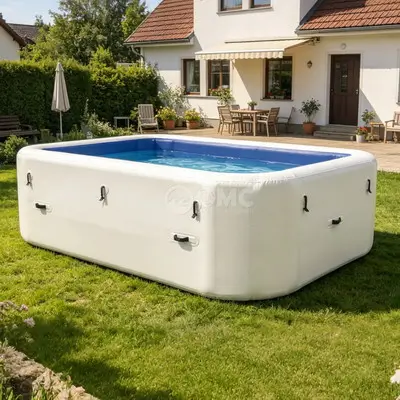
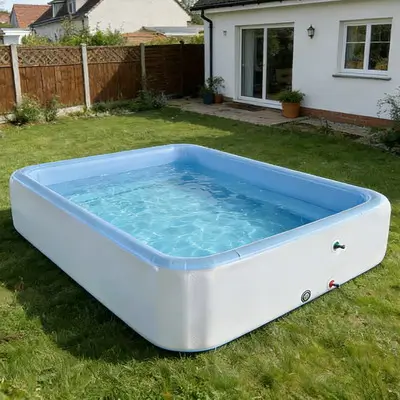
Rectangular pools feature neat, straight lines that work really well inside homes, narrow backyards and residential balconies. They make efficient use of tight, structured indoor spaces. Due to their natural pressure limitations, this style works best only for shallow water and occasional use. It fits perfectly for indoor family fun, small play pools for kids and temporary indoor water activity areas. Always keep water levels shallow and avoid leaving the pool fully filled for multiple days in a row.
Retail sellers focusing on indoor home goods can stock rectangular drop-stitch pools to serve this specific niche market. That said, we do not recommend placing large bulk orders for rectangular pools if your clients are rental companies, campgrounds or vacation resorts that keep pools filled continuously long-term.
7.2 Applicable Scenarios for Round Drop-Stitch Pools
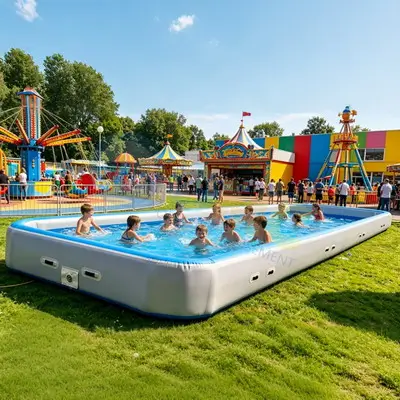
Round drop-stitch pools handle high internal pressure well, resist wall warping and deliver a long service life. This makes them a great fit for nearly all outdoor locations and commercial operations. Common use cases include private residential yards, home gardens, campgrounds, water parks, vacation rental homes and full-service resorts. They safely hold medium to deep water levels and can stay fully filled for weeks with only basic routine maintenance, helping to lower overall operating expenses.
Round drop-stitch pools remain the top pick for overseas supermarket chains, cross-border e-commerce stores and large-scale export orders. They appeal to a wider range of customers, create far fewer after-sales complaints and easily meet safety regulations across most countries worldwide.
7.3 Comprehensive Selection Checklist by Usage Demand
- Tight indoor space or narrow yard, pool used only for kids’ shallow water play: Choose rectangular drop-stitch pools
- Outdoor yard or open land, requiring deep water capacity and long-term stability: Choose round drop-stitch pools
- Personal family use, occasional water play, budget-focused purchasing: Choose rectangular style
- Commercial operation, long-term water storage, global export sales: Choose round style
- Top priority on long service life and minimal ongoing maintenance: Go with round drop-stitch pools
8. OMC Amusement Factory Professional View & Customization Capabilities 🏭
With well over a decade of hands-on experience producing inflatable water products, the team at OMC Amusement has built fully standardized production workflows and fully customizable solutions for both rectangular and round Drop-Stitch inflatable pools.
8.1 Production Experience of Drop-Stitch Inflatable Pool Products
Our factory operates complete production lines covering fabric cutting, material bonding, precision sewing and air leakage testing for all drop-stitch goods. We mass-produce rectangular and round pools in all mainstream sizes, heights and material thicknesses. For rectangular pool units, we add double-layer fabric reinforcement and reinforced double stitching around corners to reduce wear caused by concentrated stress. For round pools, we refine curved construction details to ensure even force distribution across every section. Every finished pool undergoes a 72-hour air retention test and simulated water pressure assessment before shipping out to clients.
8.2 OEM & ODM Customization Services for Different Shapes
OMC offers full OEM and ODM customization services to build exclusive rectangular or round drop-stitch pools tailored to your brand. We can adjust overall dimensions, maximum safe water depth, fabric color schemes, custom logo printing, artwork patterns and add extra functional accessories. Share your specific requirements based on local market tastes, on-site space limits and brand styling preferences. Our team handles every step from initial design drawings and sample testing all the way through full mass production. We adapt our work to fit market rules and consumer preferences across different countries and sales channels.
8.3 Factory Direct Supply Advantages for Global Buyers
As the original manufacturing source, we sell directly to international buyers with no middleman markup involved. This translates to cost-effective finished products and reliable custom manufacturing services for our partners. We accept small-batch trial orders as well as full-container bulk shipments. We also provide supporting services such as official certification document issuance, custom packaging solutions and logistics coordination. Thanks to our stable supply chain and strict in-house quality control, we continue supplying compliant, long-lasting drop-stitch inflatable pools to markets all over the world.
9. FAQ: High-Frequency Questions from Global Buyers & Users ❓
Q1: Why are round drop-stitch pools more pressure-resistant than rectangular ones with the same material?
A1: The main difference comes down to how water-generated force spreads across pool walls. Round pools have no sharp corners and convert outward pulling force into inward compression, making the most of the fabric’s natural strengths. Rectangular pools see heavy stress build up on flat walls and corners, leaving fabric under constant pulling that eventually leads to warping and damage. Internal drop-stitch threads only strengthen a pool’s vertical height and cannot resolve force-related issues caused by overall shape.
Q2: Can rectangular drop-stitch pools be filled with deep water for long-term use?
A2: We strongly advise against this practice. Deep water creates powerful sideways pressure that quickly bulges rectangular walls out of their original shape. Keeping the pool fully filled over extended periods speeds up fabric aging and causes seams to split, which creates real safety hazards. Rectangular pools are designed only for short-term use with shallow water levels.
Q3: When exporting to Europe and the United States, which style is preferred?
A3: Round pools represent the best choice for commercial sales, cross-border retail and large export orders. They pass international safety tests more easily and result in far fewer customer complaints. Rectangular pools work only for the indoor home niche market, and you must clearly label the maximum safe water depth on every product unit.
Q4: What is the service life gap between drop-stitch pools and ordinary PVC pools?
A4: Under regular everyday use, standard PVC inflatable pools last roughly 1 to 2 years. High-quality Drop-Stitch inflatable pools stay in good working condition for 3 to 5 years, with far better shape retention and stronger resistance to material aging.
Q5: Can thickened fabric make rectangular pools reach the pressure resistance level of round pools?
A5: Thickening the fabric will never bring rectangular pools up to the same performance level as round designs. Thicker material only slows down bulging a small amount and does not fix the core problem of stress buildup on flat surfaces. On top of that, material costs rise significantly, making this approach far less practical than simply selecting a round pool design from the start.
🌟 OMC Amusement makes high-pressure inflatables for global B2B brands. Buy direct from our factory to get wholesale pricing with zero middleman fees. We deliver most custom orders in 15 to 40 days with a proven 99.8% quality pass rate.
💼 Our Core Product Categories
- Drop-Stitch Lines: Heavy ice bath tubs, drop stitch swimming pools, inflatable yachts, docks, and floating platforms.
- Water Park Lines: Large lake parks, floating obstacle courses, and inflatable castles.
📬 Get a Factory-Direct Quote Within 24 Hours
Ready to update your inventory or build a custom pool? Contact our engineering desk right now for a fast reply.
- 📧 Email: info@omcplay.com
- 📲 WhatsApp / Tel: +86 15638116754