📑 Table of Contents
- 1. What Is a Drop Stitch Swimming Pool?
- 2. Why Families Prefer an Inflatable Drop Stitch Pool
- 3. Why a Drop Stitch Inflatable Pool Feels More Like a Real Pool
- 4. The Backyard Lifestyle Trend Is Driving Demand
- 5. How Wellness and Ice Bath Trends Boost Pool Sales
- 6. Why Commercial Buyers Are Investing in Inflatable Drop Stitch Pool Solutions
- 7. Durability: Materials and Engineering Standards
- 8. Why More Brands Are Launching Their Own Drop Stitch Inflatable Pool Lines
- 9. Future Trends for the Drop Stitch Swimming Pool Industry
- Conclusion
- FAQ
🌊 Drop Stitch Swimming Pool sales are climbing fast in 2026 — and the reasons go well beyond price. Buyers who explore a drop stitch pool quickly discover something a regular inflatable cannot match: walls that actually stay vertical when the water is deep. That one feature changes the whole experience.
Dig a little deeper and you will find a bigger story. Backyard budgets are up. Cold plunge therapy went mainstream. Glamping resorts need pools they can move. And dozens of brands want a private-label pool line without building a factory. All of that demand is pointing at the same product category. This guide breaks down why — across nine clear sections.
1. What Is a Drop Stitch Swimming Pool? 🔧
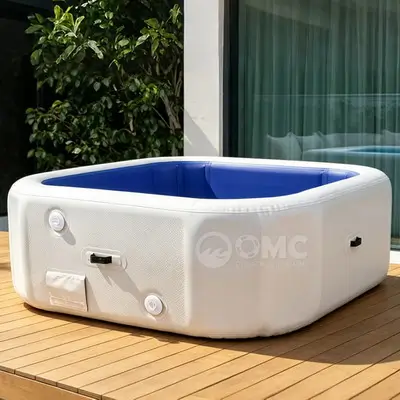
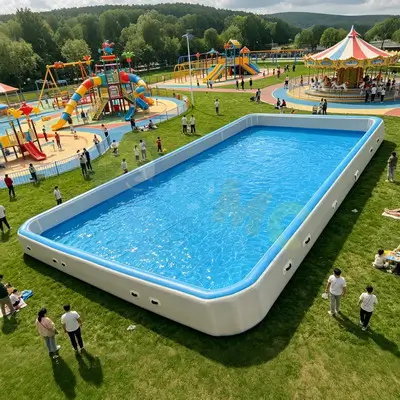
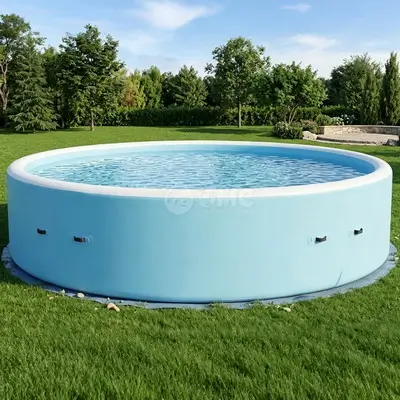
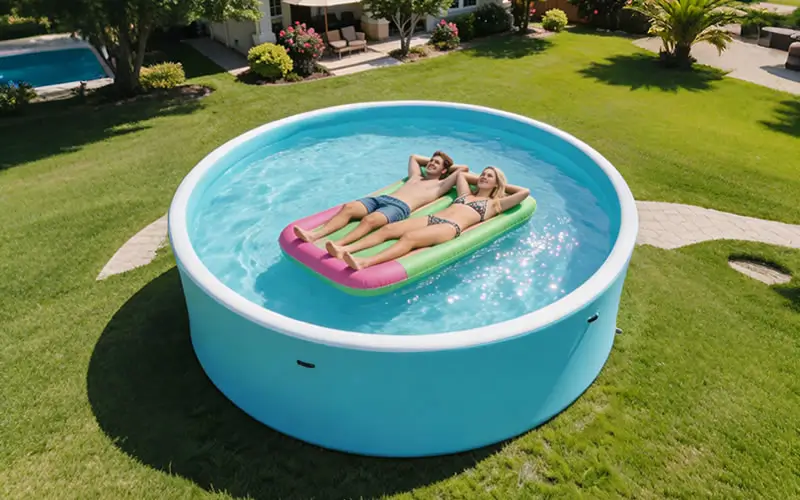
A Drop Stitch Swimming Pool is a high-pressure inflatable pool built with an internal thread structure. Those threads keep the walls rigid — even when the pool is full of water. Standard inflatable pools cannot do that. Their air-chamber walls bow outward under load.
1.1 How Drop Stitch Technology Creates a Rigid Pool Structure
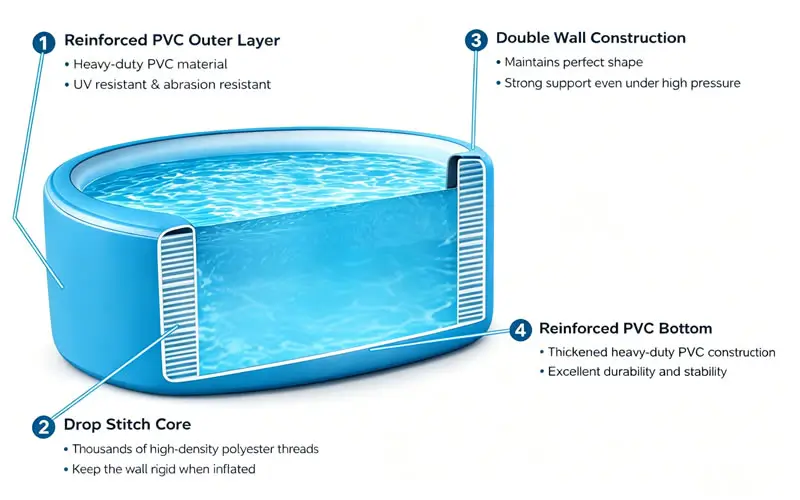
Here is how the construction works. Two layers of PVC-coated fabric sit face-to-face. Between them, thousands of polyester threads are stitched vertically — top layer to bottom layer — at tight, regular intervals.
💡 When you inflate the pool to working pressure (8–15 PSI), those threads pull taut. They stop both faces from moving apart. The wall stays flat and upright — the same way a pressed panel holds its shape under load. Thread density in quality drop stitch fabric runs 1,000–4,000 threads per square foot. That number sets how stiff the wall feels and how well it holds shape under deep water. Inflatable product structural standards covering this category are published by ASTM International.
1.2 Why Traditional Inflatable Pools Cannot Match This Design
A standard inflatable pool uses air tubes to prop up its sides. Fill that pool past 50 cm deep and the water pushes harder than the air can resist. The walls swell outward. You lose usable swim space — and the material fatigues faster.
Testing data puts the gap in plain numbers: at the same inflation pressure, a conventional inflatable wall bulges 3–5 times more than a drop stitch wall under equal water load. That is not a minor cosmetic difference. It shrinks the effective swim area, reduces depth capacity, and shortens how long the pool holds up.
📊 Want a side-by-side breakdown? Read the full traditional inflatable pool comparison — it covers drop stitch versus frame pools versus soft-wall formats in detail.
2. Why Families Prefer an Inflatable Drop Stitch Pool 🏡
An Inflatable Drop Stitch Pool gives Families real swimming performance. No concrete. No contractor. No waiting months for permits and excavation crews to finish the job.
2.1 A Premium Pool Without Permanent Construction
Let's talk numbers. An in-ground pool typically costs 5–15x more than a comparable portable option once you factor in digging, waterproofing, filtration, and restoring the landscaping afterward. Then add 4–12 weeks of construction — during which your yard is a worksite.
💰 And the costs do not stop at build day. In-ground pools need resurfacing, annual inspections, and permit renewals. Over ten years, that adds up to a number most Families underestimate at the start.
A drop stitch inflatable pool sidesteps all of that. You keep the money. You keep the flexibility. Renters, seasonal users, and people who move every few years — this format makes straightforward sense.
2.2 Easy Installation and Relocation
Most drop stitch pools are up and running in 2–4 hours. You need a standard electric pump and a water source. No tools. No hired crew.
When summer ends, drain it, deflate it, and fold it into the carry bag. It fits in a garage corner or a storage unit. Next spring, set it up somewhere else entirely if you want to. That kind of flexibility just does not exist with built-in pools.
3. Why a Drop Stitch Inflatable Pool Feels More Like a Real Pool 💦
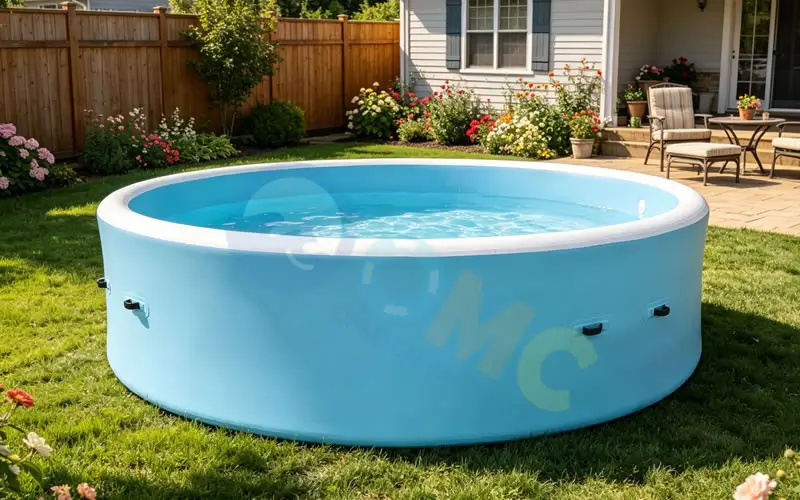
Spend an hour in a Drop Stitch Inflatable Pool and then try a conventional inflatable. The difference is hard to ignore. The water feels more settled. The walls do not flex when you push off. The swim lane stays the shape it is supposed to be.
3.1 Strong Walls Create Better Swimming Experiences
Drop stitch walls stay near-vertical from empty to full. That means the usable water area at the surface matches the footprint on the ground — no narrowing, no rounding at the corners from wall sag.
Compared with a same-size conventional inflatable, effective swim volume in a drop stitch model runs 15–25% higher. For lap swimming, kids' lessons, or group use, that extra space matters more than the spec sheet suggests.
3.2 Greater Water Depth and Stability
🌊 Because the walls hold firm, you can fill a drop stitch pool deeper. Consumer models reach 60–120 cm of effective water depth. Premium and commercial builds push past 130 cm — enough for adult lap swimming, learn-to-swim programs, and hydrotherapy use.
There is a secondary benefit worth noting: stable walls reduce wave turbulence. For swim schools and therapy applications, a calmer water surface is a real practical advantage — not just a comfort preference.
4. The Backyard Lifestyle Trend Is Driving Demand 🌿
Outdoor living spend has been climbing for several years now. It is not slowing down. And the pool is increasingly the anchor of that investment — not an add-on.
4.1 Outdoor Living Continues to Grow
The global portable pool market is forecast to grow at a CAGR of 6–9% through the mid-2020s, per market data from Mordor Intelligence. Demand is rising across Southeast Asia, the Middle East, and Latin America — regions where traditional in-ground pool construction is cost-prohibitive for most households.
The backyard has quietly become a primary leisure spend category. A pool is no longer a luxury signal for a narrow income tier. Drop stitch pricing has brought it within reach of a much broader buyer group.
4.2 Social Media Is Influencing Pool Purchases
📱 Here is a shift worth tracking. On Instagram, TikTok, and Pinterest, how a pool looks in photos now drives purchase decisions almost as much as how it performs in use. Color options, surface graphics, shape — these used to be secondary specs. Now buyers ask about them upfront.
Drop stitch pools support full surface customization. That makes them a natural fit for a market where visual identity has become part of the product value, not an afterthought.
5. How Wellness and Ice Bath Trends Boost Pool Sales 🧊
A growing share of Drop Stitch Swimming Pool buyers are not buying for lap swimming at all. They want a cold plunge tub — or something that does both jobs without buying two products.
5.1 Multi-Purpose Applications
The same structural properties that make a drop stitch pool good for swimming make it good for cold water immersion. The walls hold shape at low temperatures. The water volume stays consistent. The pool seals reliably.
That means one pool can cover recreational swimming, cold plunge recovery, contrast hydrotherapy, and resistance training — without any modification. For buyers watching their spend, that is a compelling value argument. For the engineering background on what makes this possible, the guide on drop stitch technology covers the structural detail.
5.2 From Swimming Pool to Cold Plunge Pool
❄️ Cold therapy went from niche athletic recovery tool to mainstream wellness product between 2022 and 2025. Annual growth in the cold plunge segment exceeded 20% during that period.
Dedicated stainless steel and acrylic cold plunge units carry a steep price tag. Drop stitch pools hit a much lower price point — and they deliver the core function: a rigid, cold-water container you can use daily. Many buyers who started with a drop stitch pool for summer swimming now run it as a year-round cold plunge. That shift is real, and suppliers who stock cold-weather-rated models are seeing it in their order data.
6. Why Commercial Buyers Are Investing in Inflatable Drop Stitch Pool Solutions 🏨
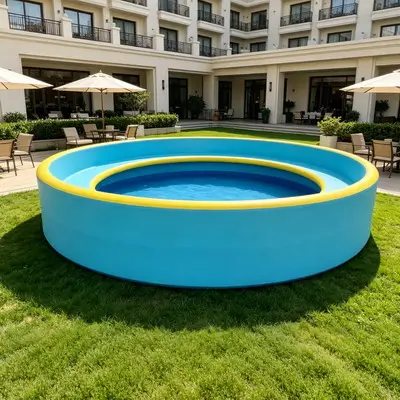
Inflatable Drop Stitch Pool systems check two boxes that matter most to commercial operators: they look premium, and you can move them. For seasonal hospitality and event businesses, that combination is hard to find elsewhere.
6.1 Resorts and Glamping Sites
A boutique resort or glamping operator has a problem that in-ground pools cannot solve: peak season demand is high, but off-season footfall does not justify the capital or the permanent land use. Drop stitch pools fit that operating model well. A full setup — from freight delivery to first fill — takes 1–2 days. Off-season, the pool deflates, packs flat, and stores in a fraction of the space a fixed structure would need.
Eco-lodges, rooftop event venues, and pop-up resort concepts are among the fastest-growing buyer segments in this category for exactly this reason.
6.2 Event Rental Businesses
🎪 Temporary pool demand at events — corporate retreats, music festivals, brand activations, private parties — has grown steadily. Event rental companies need a pool that loads into a standard freight truck, inflates reliably across dozens of cycles, and looks good enough for a premium event environment. Drop stitch pools meet all three criteria. The pack size is manageable. The visual finish is clean. And they hold up across repeated use far better than budget inflatable alternatives.
6.3 Swim Schools and Training Programs
Mobile teaching pools have become a practical growth tool for swim schools that do not own a fixed facility. A drop stitch pool with 60–100 cm depth can run beginner and intermediate lessons at community centers, school grounds, or private venues — no aquatic center required. For a full overview of how these pools are used across commercial settings, see the breakdown of commercial drop stitch pools in hospitality, events, and training.
🏭 For commercial volume orders, sourcing from a verified inflatable pool manufacturer in china with full OEM capability and international certification documentation cuts both risk and lead time on large procurement programs.
7. Durability: Materials and Engineering Standards 🔩
Three things determine how long a drop stitch pool lasts: the pressure it is built for, the fabric it is made from, and how well the seams hold over time. Each of these has measurable specs — and meaningful differences between consumer and commercial grades.
7.1 High-Pressure Construction
Quality drop stitch pools run at 8–15 PSI working pressure. Burst test ratings on compliant commercial models reach 4–6x that figure — meaning the pool can handle peak stress from hot weather, full occupancy, and direct sun without risk of failure during normal use.
PVC-coated textile performance standards, seam strength testing, and inflation retention requirements for products in this category are published by ISO International.
7.2 Reinforced PVC Materials
🧪 The fabric spec is where consumer and commercial models diverge most sharply. Here is what to look for:
| Parameter | Consumer Grade | Commercial Grade |
|---|---|---|
| Fabric weight | 600D PVC | 800D–1000D PVC |
| Total thickness | 0.9–1.1 mm | 1.2–1.5 mm |
| Tear resistance | ≥150 N | ≥200 N |
| Working pressure | 8–10 PSI | 10–15 PSI |
| Service life | 3–5 years | 5–10 years |
All PVC materials that contact the water directly must meet EU REACH chemical restrictions. The full restricted substance list for pool contact materials is maintained by the European Chemicals Agency (ECHA).
7.3 Lower Long-Term Ownership Costs
💵 A commercial-grade drop stitch pool typically runs for 5–10 years with normal care. That changes the cost math significantly.
Compare that against a budget inflatable that needs replacing every 1–3 seasons, or an in-ground pool that triggers resurfacing and inspection costs on a recurring cycle. Over a ten-year window, the annualized cost of a well-specified drop stitch pool is lower than either alternative — and the capital outlay at year zero is a fraction of in-ground construction.
8. Why More Brands Are Launching Their Own Drop Stitch Inflatable Pool Lines 🏷️
Outdoor brands, wellness labels, and leisure retailers are all moving into the pool category. A Drop Stitch Inflatable Pool is one of the few products in this space where full private-label customization is genuinely practical — without owning a factory.
8.1 OEM and Private Label Opportunities
Drop stitch manufacturing supports end-to-end custom production. That means a brand can specify:
- Pool dimensions and wall height
- Shape: round, rectangular, oval, or custom
- Surface color and printed graphics
- Valve type and placement
- Accessory bundle (pump, repair kit, cover)
- Retail packaging and private label branding
The result is a product that looks entirely proprietary on shelf — even though it is manufactured by a specialist factory. For brands entering the pool category without in-house production capability, that is a fast and low-risk path to market.
8.2 Flexible Shapes and Sizes
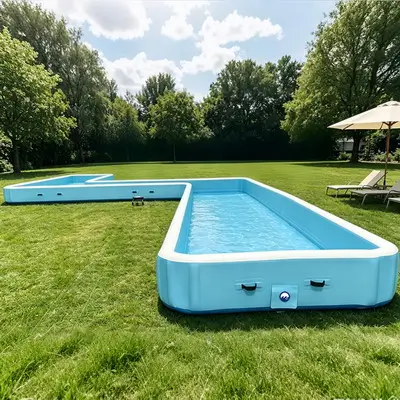
📐 Custom-dimension orders are among the fastest-growing SKU types in the drop stitch category right now. Demand is strongest for non-standard footprints: round, oval, L-shaped, and narrow rectangular formats that fit rooftop terraces, indoor fitness studios, and compact gardens where off-the-shelf sizes do not work.
The full customization and production process — from sampling through tooling, material selection, and certification support — is covered in this OEM drop stitch pool workflow guide.
9. Future Trends for the Drop Stitch Swimming Pool Industry 🚀
The Drop Stitch Swimming Pool category is not standing still. Three directions are shaping the next generation of products — and each one opens new buyer conversations.
9.1 Smarter Pool Accessories
🤖 Smart water quality sensors, auto-inflation systems, and remote temperature controls are already moving from premium niches into the mainstream portable pool market. For commercial operators running multiple pool units across a resort or event fleet, automated monitoring cuts maintenance labor and flags issues before they become failures. Expect this integration to accelerate over the next two to three years.
9.2 Modular Pool Systems
Several manufacturers are developing modular drop stitch systems — individual sections that clip or seal together to form larger or differently shaped pool configurations. The logistics case is strong: smaller individual shipping units, lower customs complexity, and the ability to scale pool capacity by adding sections rather than ordering a new unit outright. For operators with variable seasonal demand, that flexibility has real value.
9.3 Sustainable Materials
♻️ Recyclable PVC and TPU composite materials are showing up in more pool specifications every year. EU and North American market requirements are tightening, and buyers — especially in the commercial and premium consumer segments — are asking for environmental documentation alongside product specs. Manufacturers holding ISO 14001 environmental management certification are better positioned to meet these requirements as procurement policies in regulated markets continue to shift.
Conclusion 📌
The Drop Stitch Swimming Pool market is growing across every segment in 2026 — residential, commercial, wellness, and private label. The reasons are straightforward: the product performs better than traditional inflatables, costs far less than in-ground construction, and fits a wider range of use cases than most buyers initially expect.
What that means for buyers and brand operators is simple: the window to build a position in this category — whether through direct sales, private label, or commercial fleet deployment — is open right now. Waiting costs more than moving.
🏭 OMC Amusement manufactures drop stitch inflatable pools with full OEM/ODM customization support — from initial design and material specification through color matching, certification, and factory-direct global shipment. Whether you need a single custom SKU for a label launch or a large commercial procurement program, the production team is built to handle it.
📩 Get in touch today. Share your spec requirements or ask for a factory quotation. We get back to every inquiry within 24 hours.
❓ Frequently Asked Questions
Q1: How much pressure can a drop stitch pool handle?
Most drop stitch pools run at 8–15 PSI. That is 3–4x the pressure of a standard inflatable pool. Burst-test ratings on commercial models typically reach 4–6x the working pressure, giving you a solid safety margin across peak-use conditions — full sun, high occupancy, warm water.
Q2: How long does a drop stitch pool last?
With normal use and basic care, a quality drop stitch pool lasts 5–10 years. Consumer-grade models average 3–5 seasons. Commercial-grade builds use heavier fabric and higher-rated seams, so they are designed for multi-year, high-frequency deployment.
Q3: Can a drop stitch pool be used as an ice bath pool?
Yes — and many buyers use them exactly this way. The rigid walls hold their shape in cold water just as well as warm. The sealed construction keeps temperature stable. You can run the same pool for summer swimming and winter cold plunge recovery without any modification. Dedicated drop stitch cold plunge models are also available if you want a purpose-built option.
Q4: Is OEM customization available for size and color?
Yes. Most factories support full OEM custom orders — dimensions, shape, surface color, printed graphics, and retail packaging. MOQ varies by factory and spec. Sampling is usually available before you commit to full production, so you can approve a physical sample first.
Q5: What is the main difference between a drop stitch pool and a regular inflatable pool?
It comes down to what holds the walls up. A drop stitch pool uses thousands of internal polyester threads stitched between two PVC layers — those threads keep the walls vertical when the pool is full. A regular inflatable pool uses air chambers, which bow outward under deep water pressure. That reduces usable swim volume, limits depth capacity, and puts more wear on the material over time.
🌟 OMC Amusement makes high-pressure inflatables for global B2B brands. Buy direct from our factory to get wholesale pricing with zero middleman fees. We deliver most custom orders in 15 to 40 days with a proven 99.8% quality pass rate.
💼 Our Core Product Categories
- Drop-Stitch Lines: Heavy ice bath tubs, drop stitch swimming pools, inflatable yachts, docks, and floating platforms.
- Water Park Lines: Large lake parks, floating obstacle courses, and inflatable castles.
📬 Get a Factory-Direct Quote Within 24 Hours
Ready to update your inventory or build a custom pool? Contact our engineering desk right now for a fast reply.
- 📧 Email: info@omcplay.com
- 📲 WhatsApp / Tel: +86 15638116754