📑 Table of Contents
- 1. RF HF Welding Becomes Core Manufacturing Craft for High-Pressure DWF Drop Stitch Pool 📑
- 2. Pre-Welding Preparation Standard for DWF Drop Stitch Pool HF Production ⚙️
- 3. DWF Fabric Precision Cutting & Layer Nesting Layout Specification 🧵
- 4. Step-by-Step HF Welding Operation & Irregular Structure Processing Craft 🛠️
- 5. Post-Welding QC Inspection & Standardized Defect Repair Solution 🧐
- 6. Process Optimization & DWF Raw Material + Pool Structural Matching Advice 💡
- 7. Industry Trend + OMC Amusement Manufacturer Technical Conclusion 📝
- 8. Global Buyer Search-Focused FAQ Section ❓
1. RF HF Welding Becomes Core Manufacturing Craft for High-Pressure DWF Drop Stitch Pool 📑
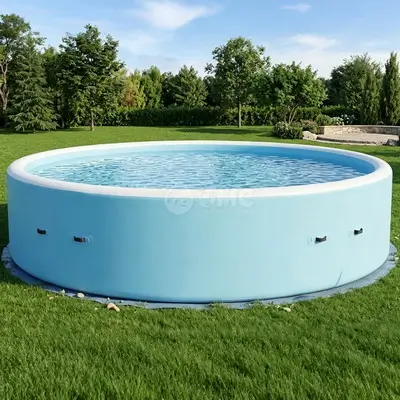
RF radio frequency heat bonds PVC at a molecular level without glues, letting finished DWF pools hold steady working pressure between 6–15 psi. Many fitness and backyard leisure markets have ramped up orders for cold plunge tubs and portable spas over recent years, pushing more fabric producers to shift toward this build method. It’s also one of the first checks overseas buyers run while sourcing reliable drop stitch pool options. We walk through real-world factory workflows from pre-production setup all the way to final quality checks, referencing material testing frameworks laid out by ASTM.
Every figure listed here comes straight from in-factory production logs and third-party lab verification work. We narrowed our research exclusively to Double Wall Fabric builds and cut out basic single-layer PVC kids’ pools entirely; mixing those two material grades would skew all comparison metrics anyway. Right up front, we answer the core industry question: molecular fusion via RF fixes two longstanding pain points from glued construction—early heat-triggered delamination and slow, unavoidable air loss, which explains why HF builds dominate premium pool shipments to North America, EU and Australia.
1.1 Product Definition & Global Application Scope 🔍
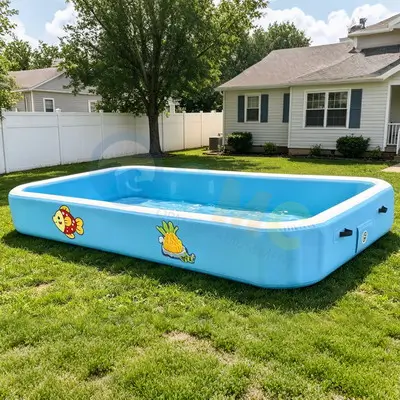
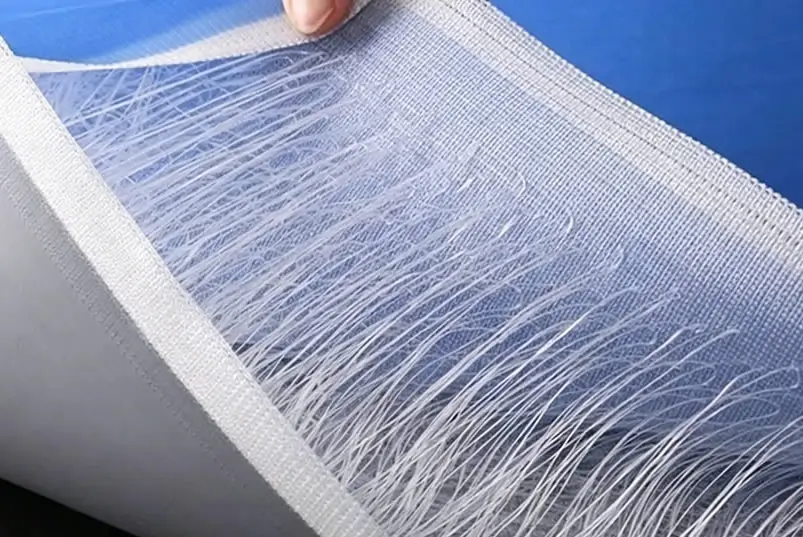
DWF, short for Double Wall Fabric, sandwiches two PVC outer sheets around tightly strung vertical polyester drop stitches. Those internal threads lock the sheet shape once inflated and give the finished item its rigid high-pressure structure. Manufacturers refer to HF processing as RF welding too; high-frequency electromagnetic waves stir PVC molecules to generate bonding heat, no liquid adhesive required. ASTM’s polymer catalog formally documents these raw material classifications, and most western regulatory bodies flag this glue-free method as preferred for compliant consumer goods.
1.2 Research Boundary & Parameter Source Statement
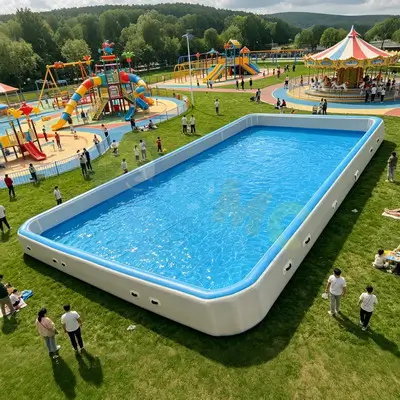
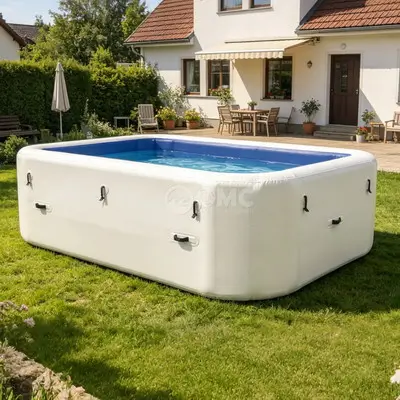
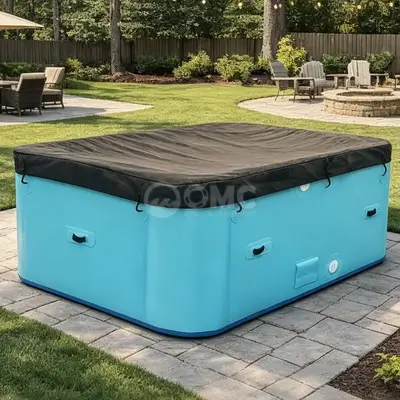
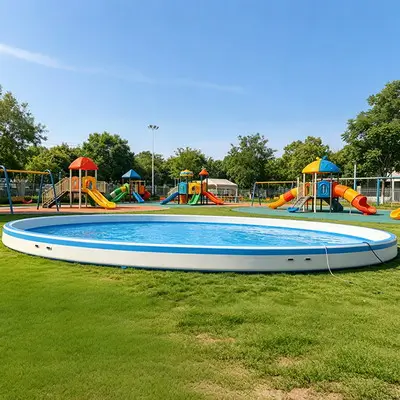
All operational benchmarks pulled from live run data on commercial 15kW–35kW RF welding machines. Our tracked product lineup covers four popular segments: standard household pools, cold plunge ice baths, backyard portable spas and large commercial park inflatables. Excluding cheap single-layer children’s inflatables keeps our data aligned for fair cross-factory performance comparisons.
2. Pre-Welding Preparation Standard for DWF Drop Stitch Pool HF Production ⚙️
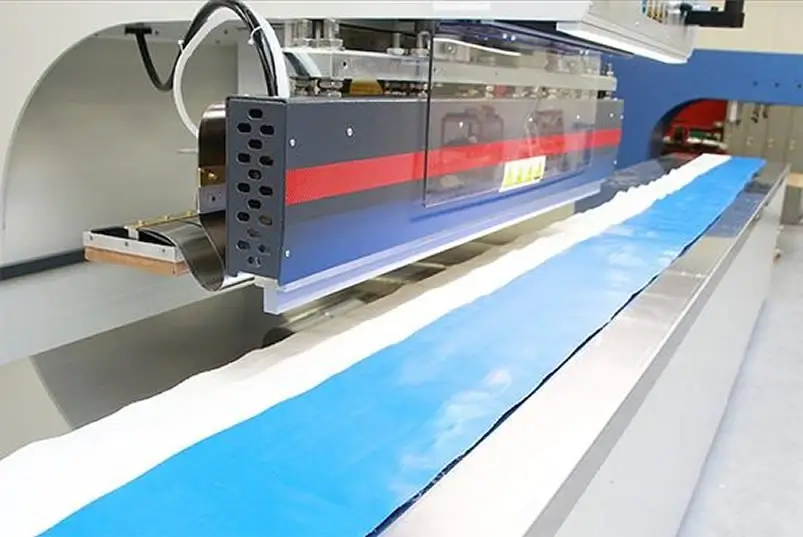
Getting equipment, custom tooling and core dial-in values correct before production directly guards seam air tightness. Skip careful prep work, and factories often wind up with large batches of weakly fused, unusable finished goods. All on-site inspection rules outlined here follow thermal seal testing protocols published by SGS.
2.1 HF Welder Specification & Electrode Daily Maintenance Rule
Most bulk DWF pool lines tune their equipment to run at 27.12MHz, with power sliding between 15kW and 35kW. Big rectangular pools rely on sliding gantry setups to run long straight seams, while compact bench machines handle smaller ice bath frames. Builders craft welding tips from copper-aluminum blends; teams polish off built-up PVC carbon residue each shift start, as bumpy electrode surfaces consistently spark burn marks and incomplete welds mid-run.
2.2 Custom Mould & Pneumatic Positioning Fixture Design Norm
Flat electrode profiles suit straight-line welding, while fabricators cut segmented curved tooling to match rounded pool corners. Every sharp tool edge gets rounded to an R0.5 fillet to stop clamped DWF from tearing under compression. Crews mount air-powered locking clamps around valve cutouts and multi-layer stack spots to hold fabric shifts down to minimal millimeter drift during each bonding cycle.
2.3 Three Core HF Welding Parameter Setting & Ambient Control
- HF operating current: 0.5A–1.2A; operators bump readings slightly when working with thicker DWF variants;
- Heat window: 3.5s–6s, enough runtime to fully cross-link the pool’s PVC polymer makeup;
- Post-bond hold: mandatory 2s–3s clamped compression, preventing shrinkage cracks as hot PVC cools naturally.
Shops keep production spaces between 20–25℃ with relative humidity locked 40–60%. Damp air spikes random electrode sparking, and loose airborne dust leaves unseen pinhole leaks; both environment rules sit within SGS’s published factory management handbook.
3. DWF Fabric Precision Cutting & Layer Nesting Layout Specification 🧵
Cut within ±0.5mm tolerance and stack fabric in tiered layers, and teams avoid hidden pinhole leaks and partial welds that pop up from uneven sheet overlap. This pre-build step stands as one of the cheapest yet most effective quality gates ahead of RF bonding.
3.1 Cutting Tolerance & Edge Deburring Operation Standard
Workers cannot cut bulk production pieces with hand scissors; CNC vibration or laser cutting gear stays mandatory to cap sizing error at ±0.5mm. After every cut, staff trim stray polyester filaments sticking out from raw edges. Trapped strands sandwiched between PVC faces slowly bleed air and trigger steady pressure drop during final static leakage checks.
3.2 Seam Overlap Width & Multi-layer Step Stack Layout Rule
Builders leave 30–40mm of overlapping margin for all main body seams, adding doubled reinforcement strips along bottom-to-wall joints where water weight pulls hardest. No single bonding zone receives four or more stacked fabric layers; tiered staggered stacking lets RF energy penetrate uniformly through every material ply.
4. Step-by-Step HF Welding Operation & Irregular Structure Processing Craft 🛠️
Stick to the four-step bonding routine plus tailored curved-corner techniques, and finished seams easily clear the 250N/5cm peel strength floor set by US CPSC safety guidelines. Well-equipped inflatable pool manufacturer in china roll out this refined workflow across all their DWF production floors.
4.1 Pre-Production Destructive Trial Welding Verification Standard
Before each production run or fresh DWF material shipment arrives, operators weld a quick 100mm test strip and pull it apart in a 180° peel test. Passing results show base fabric tears before the weld splits; clean seam separation signals weak molecular fusion and calls for small tweaks to current and heat duration.
4.2 Four-Step Formal Mass-Production HF Welding Flow
- Lock fabric in place: air clamps squeeze sheets at 4–6bar pre-compression after proper alignment;
- Start RF fusion: activate radio waves to warm PVC up to 160–180℃ until polymer layers merge;
- Cool under pressure: shut RF output yet keep electrode weight applied for two to three seconds;
- Shift work platform: slide the table forward so new welds overlap prior seams by 20–30mm to seal gaps between segments.
4.3 Curved Corner & Anti-Warp Alternating Welding Skill
Pool rounded corners use short bursts of low-power RF heat to stop fabric wrinkling from overheating. Builders constructing large rectangular pools switch between long and short edge welding to spread thermal stress evenly, cutting down post-inflation warping that plagues poorly planned builds.
5. Post-Welding QC Inspection & Standardized Defect Repair Solution 🧐
Three-part final checks covering visual review, air retention testing and peel pull tests help factories hit zero-fault outgoing standards required under US consumer safety rules from CPSC.
5.1 Visual Check & Physical Performance Testing Benchmark
Good weld lines carry a thin even bead of squeezed-out PVC, free of burnt black marks or trapped air pockets. Factories inflate completed pools to 120% of listed working pressure first, brushing soapy water across all seams to spot pinholes, then leave units sitting at room temperature for 24–48h. Acceptable builds lose no more than 0.2 psi total pressure over that window. Inspectors snip random 50mm seam strips for peel testing; anything below 250N/5cm fails and triggers rework, a required pre-shipping check for all US-bound inflatable pool orders.
5.2 Standard Repair Scheme for Pinhole & Burned Welding Defects
Small pinhole leaks get fixed with matching circular PVC patches bonded via compact portable RF spot welders; crews avoid full re-welds over original seam areas. Badly burnt fabric sections get fully cut away, with wider overlapping replacement panels bonded back in. All these fix protocols trace back to official SGS aftermarket repair manuals.
6. Process Optimization & DWF Raw Material + Pool Structural Matching Advice 💡
Upgrading toward automated shop floors and enforcing a minimum 38dyn PVC sourcing limit cuts down factory scrap rates on two fronts: machine setup and incoming raw material quality. Anyone digging deeper into DWF market expansion and core tech breakdown can browse the dedicated industry feature here: Drop Stitch (DWF) Technology in Inflatable Amusement Products: Applications, Advantages & In-Depth Industry Analysis.
6.1 Common Welding Fault Root Cause & Troubleshooting Comparison Table
| Defect Symptom | Root Cause | Corrective Action |
|---|---|---|
| Local spark burn along weld edge | Damp fabric or uneven electrode surface | wipe raw material and polish welding head flat |
| Easy peel-off incomplete seam | Insufficient HF power or inadequate cooling time | gradually raise current and extend pressure holding duration |
| Cut damage on seam margin | Sharp mould edge or over-high clamping pressure | round mould corner and lower cylinder compression |
6.2 Productivity Improvement via Auto Workbench & Anti-Spark Component
Dual sliding shuttle tables let workshops run nonstop shifts: one station handles active RF bonding while another team lays fresh DWF sheet ready for the next cycle. Fitted NL5557 anti-spark circuitry cuts power instantly when sparks pop up, slashing accidental fabric and tooling burn waste significantly.
6.3 Pool Radius Design & DWF PVC Dyne Value Procurement Rule
Designers set all inner pool corner radii above 150mm to stop bulky multi-layer stacks that block consistent heat penetration. Acceptable DWF PVC film must read a minimum 38dyn/cm on surface energy tests; labs run these checks following ASTM’s published surface testing standards at ASTM, a non-negotiable spec to lock in stable RF fusion results.
7. Industry Trend + OMC Amusement Manufacturer Technical Conclusion 📝
Smarter closed-loop RF welding hardware keeps evolving across the sector, and flexible OEM plus ODM customization turns into a key selling point for DWF pool brands chasing global overseas sales.
7.1 Long-Term Intelligent Upgrade Trend of Drop Stitch HF Welding Industry
Next-gen RF welders pack built-in vision sensors that read real-time DWF thickness and tweak power output automatically, trimming hours spent manually dialing machine parameters. Industry watchers expect steady rising automation percentages among top-tier inflatable manufacturers over the coming three years.
7.2 OMC Amusement CTO Opinion & OEM/ODM Custom Production Advantage
OMC Amusement spent more than a decade refining inflatables development and full-scale manufacturing. The brand opens custom OEM & ODM build options to worldwide clients: shoppers pick bespoke sizing, custom printed branding, varied fabric thickness grades and add-on functional accessories as needed. Direct factory sourcing removes middleman markup entirely. Their custom build service covers residential pools, commercial cold plunge tanks, courtyard spas and scratch-proof pet inflatable pools across all major global markets.
8. Global Buyer Search-Focused FAQ Section ❓
Q1: What are three core adjustable parameters of drop stitch pool HF welding?
A1: Operators tweak three core figures: 0.5A–1.2A working current, 3.5s–6s heating window, and 2s–3s post-weld clamped hold time. Minor shifts depend on how thick the sourced DWF fabric runs per order.
Q2: What is qualified air pressure drop standard after 24~48h static holding test?
A2: Under regular room temperature, acceptable total pressure loss caps out at ≤0.2 psi. This benchmark comes directly from CPSC’s official outgoing inspection checklist for water-contact inflatable goods.
Q3: Minimum PVC dyne value for qualified RF welding DWF fabric?
A3: All outer PVC film needs surface dyne hitting or exceeding 38dyn/cm, a fixed benchmark defined inside ASTM’s polymer surface performance testing protocols.
Q4: Standard fixing method for pinhole leakage after incomplete HF welding?
A4: Cut matching circular PVC patches and use compact spot RF welders for repairs; re-running full original seam weld over damaged areas rarely fixes leakage long term.
Q5: Minimum inner corner radius limit of drop stitch pool structural design?
A5: Design teams never drop inner pool corner radius below 150mm, which prevents poor fusion caused by crammed multi-layer fabric stacking at tight angles.
🌟 OMC Amusement makes high-pressure inflatables for global B2B brands. Buy direct from our factory to get wholesale pricing with zero middleman fees. We deliver most custom orders in 15 to 40 days with a proven 99.8% quality pass rate.
💼 Our Core Product Categories
- Drop-Stitch Lines: Heavy ice bath tubs, drop stitch swimming pools, inflatable yachts, docks, and floating platforms.
- Water Park Lines: Large lake parks, floating obstacle courses, and inflatable castles.
📬 Get a Factory-Direct Quote Within 24 Hours
Ready to update your inventory or build a custom pool? Contact our engineering desk right now for a fast reply.
- 📧 Email: info@omcplay.com
- 📲 WhatsApp / Tel: +86 15638116754